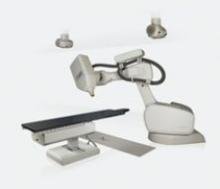
By improving image quality with low count-rate imaging, GEMINI TF opens the door to the next emerging set of applications for PET — molecular imaging. GEMINI TF is available in 16-slice and 64-channel CT configurations.

Resonance Technology Co. Inc. will exhibit a range of features to its CinemaVision audio-video entertainment system as well as the FuncLAB functional MRI system with fully automated image data processing.

Delivering high-resolution in 4,096 shades of gray, the Sony FilmStation system takes advantage of a new thermal print head and new blue thermal film specifically engineered for the system. The resulting diagnostic-quality images facilitate interpretation of studies in a full range of modalities, including DR, CR, CT, MRI and others.

Merge eMed has announced the release of Fusion RIS Version 3.1. This version improves upon Fusion RIS, now used as an integrated business and clinical workflow solution in more than 150 hospital-based and freestanding radiology imaging facilities.

Numa has a series of enhancements to NumaLink, its cross-vendor data translation solution, and NumaStore, its nuclear medicine and PET/CT image management system.

Sectra’s management tool, Sectra Control Tower, provides department managers full control and overview of current production statistics as well as historical data used for trend analysis.
The tool now also features live reports, with unique capabilities of revealing and analyzing bottlenecks in real time. The live reports provide the department manager with instant overview of such selected performance statistics as current queue lengths, patient waiting times and resource usage.

With this year's $108,000 Section 179 limit, medical purchases completed before Dec. 31, 2006 can count as eligible equipment acquisitions in this fiscal year.
In order to stimulate economic growth, the Internal Revenue Service Section 179 states: "You may elect to expense part or all of the cost of Section 179 property that you placed in service during the tax year and used predominately (more than 50 percent) in your trade or business."

Today there is no question that a digital infrastructure – modalities and information systems – increase departmental efficiency and productivity, while at the same time enhances patient care. Digital radiography – whether it is the phosphor-based computed radiography (CR) or flat panel detector-based direct radiography – are at the cornerstone of this evaluation.

In today’s environment of increasing accountability and cost optimization, radiology centers are seeking ways to manage their capital expenses, their operational expenses and achieve ROI for their investments.
When Larry Lempka, director of Radiology at Campbell County Memorial Hospital, evaluated a PACS for his 90-bed community and trauma hospital, his selection criteria included system functionality, scalability and affordable upfront cost as well as minimal continuing operational expenses.

Healthcare organizations around the world are actively looking for new ways to improve the flow of work throughout their facilities. With the goal of increased productivity, cost-savings and improved quality of care in mind, one such organization set out to improve workflows specific to its radiology department.

Subscribe Now