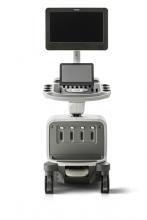
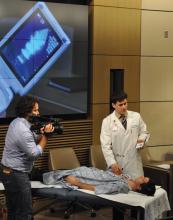
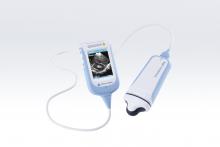
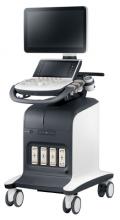
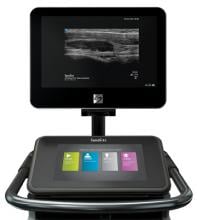
As a less expensive, radiation-free form of medical imaging, ultrasound is finding increased utility in many areas of healthcare. The technology’s evolving flexibility and portability make it an attractive option for doctors looking to triage patients in an emergency room, perform rapid cardiology examinations or offer supplemental imaging for women who have already undergone screening mammograms. Its use is rapidly expanding at the point of care in hospitals in more than 20 specialties, according to a December 2013 report in the journal of the World Heart Federation, Global Heart.1


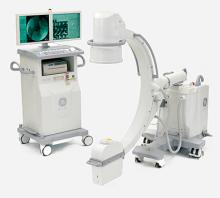
Mobile C-arms have become a popular option in many operating rooms (ORs) across the nation as healthcare organizations look to save space and money. According to Klaus Hörndler, managing director of Ziehm Imaging, “ORs in hospitals are becoming ever smaller, while more devices are being used inside them.” Because mobile C-arms are smaller, lighter and more easily maneuvered than fixed angiography systems, they provided an effective solution. At a fraction of the cost of fixed angiography, these systems are also a good option for budget-conscious facilities that have limited financial resources or are experiencing budget cuts. 


With healthcare reform’s focus on information technology (IT) as the primary vehicle for change, there has been an increased interest in this area. Health IT software has taken center stage as healthcare facilities look to implement new Stage 2 Meaningful Use requirements. So, it is no wonder that the Healthcare Information and Management Systems Society (HIMSS) annual meeting, held Feb. 23-27 in Orlando, Fla., drew a record crowd of attendees and exhibitors alike. 


A study with a new ultrasonic scanning technique shows that scanning of the carotid arteries can reveal who is at high risk of being hit by a blood clot. 

Molecular breast imaging (MBI), also referred to as breast-specific gamma imaging (BSGI), can detect cancer independently of breast tissue density. 


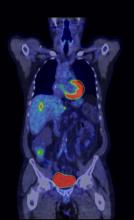
GE Healthcare received U.S. Food and Drug Administration (FDA) 510(k) clearance of its Q.Clear technology, which is designed to provide up to two times improvement in both quantitative accuracy and image quality in PET/CT imaging. 


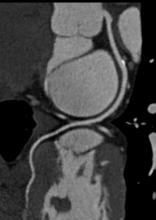
Coronary artery calcium scoring, a test that measures the amount and pattern of calcium that has accumulated in a patient’s coronary arteries, appears to provide an early indication of a person’s long-term risk for heart disease, according to data from five studies presented at the American College of Cardiology (ACC) 63rd Annual Scientific Session.


Congress recently passed the Protecting Access to Medicare Act of 2014, which requires use of appropriate use criteria (AUC) and clinical decision support (CDS) software to get Medicare reimbursement. This will likely shift focus onto IT vendors who can supply this software. In addition, the use of CDS is part of Stage 2 Meaningful Use requirements for electronic medical records (EMR), so the new Medicare requirements will move CDS up on many IT departments' priority lists.


West Physics acquired Medical Physics Services Inc. (MPS) of Daphne, Ala. MPS has provided diagnostic medical physics testing and consulting services in Alabama, Florida and Mississippi since 1990.

Subscribe Now