News | Magnetic Resonance Imaging (MRI) | March 26, 2026

Trained on 300,000+ scans, AI matches specialists in diagnosing many heart conditions.

MRI, cardiac imaging, AI

Photo: Getty Images


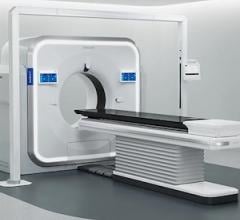
March 25,  2026 A Penn Medicine–led team has developed a first‑of‑its‑kind artificial intelligence system that interprets cardiac MRI scans with performance approaching expert clinicians. Trained on more than 300,000 MRI video clips from roughly 20,000 patients, the model can assess heart function and diagnose dozens of diseases using only non‑contrast imaging. The work was published in Nature Biomedical Engineering.

“Cardiac MRI is one of the most powerful tools available to cardiologists, but interpreting these scans requires rare expertise, and many hospitals -especially community and rural centers- lack specialists who regularly read complex cardiac MRI studies,” said Rohan Shad, MD, an integrated cardiothoracic surgery resident in the Perelman School of Medicine at the University of Pennsylvania and a co-author of the study.

The “foundation model” learns by linking MRI videos to their corresponding radiology reports, enabling it to recognize a wide range of conditions without extensive labeled data. In tests, it estimated ejection fraction with expert‑level accuracy and identified severe heart dysfunction far more effectively than traditional AI methods. It also diagnosed 39 cardiac conditions — including hypertrophic and dilated cardiomyopathies — with AUC scores as high as 0.97.

In a real‑world screen of more than 40,000 scans, the AI flagged 112 previously undiagnosed cases of hypertrophic cardiomyopathy. Researchers say the system could help hospitals without specialized cardiac imaging expertise detect rare but treatable disease earlier.

The team plans prospective clinical studies and is expanding training data with tens of thousands of additional scans. The pretrained model has been released freely for academic use.

Click here to read the article in Nature Biomedical Engineering.

Related Content

News | Cybersecurity

March 23, 2026 —Sacumen has launched ConnectX, a unified AI platform that gives cybersecurity product companies full ...

Time March 25, 2026
arrow
News | Computed Tomography (CT)

March 23, 2026 — GE HealthCare has received 510(k) clearance from the U.S. Food and Drug Administration (FDA) for ...

Time March 23, 2026
arrow
News | Radiology Business

March 1, 2026 — A new study from the Harvey L. Neiman Health Policy Institute found that practice turnover (i.e ...

Time March 19, 2026
arrow
News | Magnetic Resonance Imaging (MRI)

March 18, 2026 — GE HealthCare and Springbok Analytics have entered a development agreement that will aim to leverage ...

Time March 18, 2026
arrow
News | Cardiac Imaging

March 16, 2026 — The American Society for Preventive Cardiology (ASPC) will host its 2026 Virtual Imaging Symposium, a ...

Time March 17, 2026
arrow
News | Radiology Education

March 17, 2026 – The Center for Radiology Education (CRE) has announced a nationwide initiative to provide scholarships* ...

Time March 17, 2026
arrow
News | Radiology Business

March 12, 2026 — DelveInsight's has released its latest Diagnostic Imaging Equipment Market Insights report. The in ...

Time March 13, 2026
arrow
News | Stroke

March 11, 2026 — Brainomix, a provider of AI-powered imaging tools for stroke and lung fibrosis, has announced the ...

Time March 11, 2026
arrow
News | HIMSS

March 9, 2026 — Fujifilm Healthcare Americas Corp. is showcasing how its latest AI-powered enterprise imaging solutions ...

Time March 10, 2026
arrow
Feature | Artificial Intelligence | Kyle Hardner

Once considered an adjunct brain cancer therapy and a last-resort treatment, noninvasive radiosurgery has evolved ...

Time March 09, 2026
arrow
Subscribe Now