Photo: Getty Images
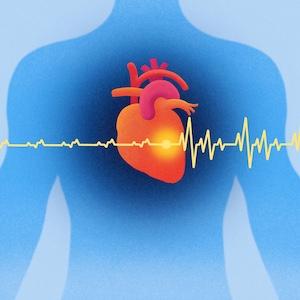
March 25, 2026 A Penn Medicine–led team has developed a first‑of‑its‑kind artificial intelligence system that interprets cardiac MRI scans with performance approaching expert clinicians. Trained on more than 300,000 MRI video clips from roughly 20,000 patients, the model can assess heart function and diagnose dozens of diseases using only non‑contrast imaging. The work was published in Nature Biomedical Engineering.
“Cardiac MRI is one of the most powerful tools available to cardiologists, but interpreting these scans requires rare expertise, and many hospitals -especially community and rural centers- lack specialists who regularly read complex cardiac MRI studies,” said Rohan Shad, MD, an integrated cardiothoracic surgery resident in the Perelman School of Medicine at the University of Pennsylvania and a co-author of the study.
The “foundation model” learns by linking MRI videos to their corresponding radiology reports, enabling it to recognize a wide range of conditions without extensive labeled data. In tests, it estimated ejection fraction with expert‑level accuracy and identified severe heart dysfunction far more effectively than traditional AI methods. It also diagnosed 39 cardiac conditions — including hypertrophic and dilated cardiomyopathies — with AUC scores as high as 0.97.
In a real‑world screen of more than 40,000 scans, the AI flagged 112 previously undiagnosed cases of hypertrophic cardiomyopathy. Researchers say the system could help hospitals without specialized cardiac imaging expertise detect rare but treatable disease earlier.
The team plans prospective clinical studies and is expanding training data with tens of thousands of additional scans. The pretrained model has been released freely for academic use.
Click here to read the article in Nature Biomedical Engineering.
 October 05, 2026