Getty Images
January 24, 2024 — Whole Body MRI, a private clinic committed to delivering accurate and comprehensive diagnostic solutions that empower patients and physicians to make informed decisions about their health, today released new data that shows a concerning gap in Canadians’ understanding of MRIs. While the medical imaging technique is widely used and is critical for the early detection of cancers and diseases, the survey revealed that many Canadians hold harmful misconceptions about MRIs that may deter them from getting screened.
Key Findings:
- Almost half of Canadians (47%) mistakenly believe MRI scans expose patients to radiation.
- Almost two in five (36%) Canadians incorrectly think MRI and CT scans use the same technology to create diagnostic images of your body.
- Almost one in five (18%) Canadians believe the misconception that MRI scans can cause infertility in some patients.
- Younger Canadians (18-34) were found to be more likely to believe MRI scans expose patients to radiation (49%) and more likely to think MRI scans can cause infertility (23%).
Addressing the misconceptions
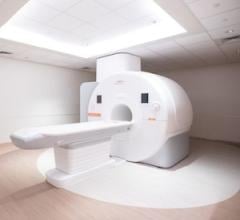
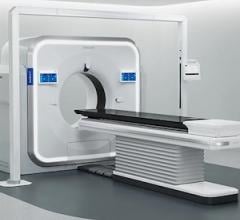
The survey findings highlight a common misconception among many Canadians (47%), who mistakenly think that MRI scans expose patients to radiation. This misunderstanding may be fueled by the belief that MRI and CT scans employ the same technologies for diagnostic imaging of the body — a belief held by 36 per cent of Canadians. While CT scans use ionizing radiation, which can damage cells and increase cancer risk over time, MRI scans are radiation-free. Setting themselves apart from other medical imaging techniques like CT scans and X-rays, MRI scans utilize a non-ionizing approach, employing powerful magnetic fields and radio waves to generate detailed and precise images of the body.
The misconception that MRI scans can lead to infertility in some patients also often arises from the unfounded belief that MRI scans involve radiation. While very high radiation doses can damage or kill eggs or sperm, MRI scans are radiation-free.
In addition to dispelling these misconceptions, it’s essential to recognize that MRI scans play a vital role in detecting and diagnosing conditions that impact soft tissue, such as tumours or brain disorders. As a crucial tool for early diagnosis, MRI scans can significantly improve patient outcomes by identifying health concerns at an early stage.
“Educating Canadians on the benefits and risks is critical in ensuring that patients feel at ease when undergoing MRI scans for cancer and other diseases. Given the significance of early detection, Canadians need to know that MRI scans are precise, non-invasive and radiation-free,” said Dr. Nirav Patel, CEO and Chief of Radiology at Whole Body MRI. “Whether referred by your doctor for a specific concern or if you’re exploring preventative health scans, MRI scans provide detailed insight to help Canadians improve their health outcomes.”
Methodology
These are the findings of a survey conducted by Whole Body MRI from December 11th to 13th, 2023, among a representative sample of 1,502 online Canadians who are members of the Angus Reid Forum. The survey was conducted in English and French. For comparison purposes only, a probability sample of this size would carry a margin of error of +/-2.5 percentage points 19 times out of 20.
For more information: https://wholebodymri.ca/

 October 08, 2026