Focused ultrasound, an innovative, new procedure being used by USF Health Morsani College of Medicine neurosurgeons at Tampa General Hospital for the first time in the region offers promising treatment for people suffering from essential tremor, Parkinson’s disease, and other debilitating disorders.
July 5, 2022 — Focused Ultrasound, an innovative, new procedure being used by USF Health Morsani College of Medicine neurosurgeons at Tampa General Hospital (TGH) for the first time in the region offers promising treatment for people suffering from essential tremor (ET), Parkinson’s disease, and other debilitating neurological disorders. The minimally invasive method is FDA-approved.
The procedure – which is typically done on an outpatient basis – is part of the next generation of care at Tampa General, and aligns with its commitment to driving innovation,” said Dr. Oliver Flouty, assistant professor in the Department of Neurosurgery and Brain Repair at USF Health Morsani College of Medicine and a neurosurgeon at Tampa General.
“This creates new opportunities to help patients with essential tremor and other neurological conditions who haven’t fully responded to traditional treatments,’’ he said. “It’s a powerful, new tool we now have at our disposal and we expect it to improve the lives of many patients who struggle with these disorders, particularly disabling tremors.’’
Approximately 10 million Americans suffer from some form of ET, a condition that causes uncontrollable shaking of the hands, head and voice. In the initial stages, the tremor is mild, but progresses over time. In some patients, the severity of the tremor becomes unbearable, interfering with daily activities, such as eating, dressing, or typing on a keyboard. ET is more common in people over age 40, although it also affects people who are much younger.
Parkinson’s disease, another neurodegenerative disorder, affects an estimated 1 million people in the United States, with symptoms such as tremor, rigidity, slow movement, and unstable posture. When traditional medication induces side effects or isn’t well tolerated, Focused Ultrasound may be an option for select Parkinson’s patients who suffer from symptoms primarily affecting one side of the body or suffer mostly from tremors while their remaining symptoms are medically managed.
“Movement disorder neurologists now can offer their ET and Parkinson’s patients a less-invasive surgical option as part of their treatment plan,” said Dr. Yarema Bezchlibnyk, assistant professor in the Department of Neurosurgery and Brain Repair at USF Health Morsani College of Medicine and a neurosurgeon at Tampa General. “This definitely expands what we can do, and drives our efforts to help transform the lives of people living with debilitating neurological conditions.”
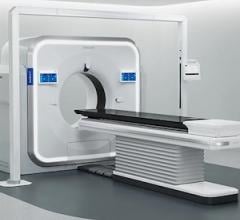
This new technology works in concert with an existing, compatible magnetic resonance imaging (MRI) unit at Tampa General. USF Health Morsani College of Medicine neurosurgeons conducted this region’s first Focused Ultrasound treatment for ET at Tampa General on May 14.
Focused Ultrasound is primarily used to treat and improve tremors of the hand by employing high-intensity Focused Ultrasound beams guided by an MRI machine. The procedure requires no anesthesia or exposure to ionizing radiation and because there are no incisions, risk of infection is minimal. Focused Ultrasound is FDA-approved for disabling tremor and select Parkinson’s patients.
During the procedure, the patient’s head is fitted into a helmet surrounded by a soft membrane filled with cool water, a medium through which the ultrasound’s sound waves travel. A computer then carefully calibrates 1,024 independent ultrasound transducers arrayed around the head to precisely focus the ultrasound beams on targets such as the thalamus, an area of the brain that controls muscle activity and causes tremors. The patient is awake throughout the procedure.
“Millions of Americans struggle every day with ET and Parkinson’s disease, and giving them this choice to improve their lives is part of the process of continuous improvement here at Tampa General,’’ said Dr. Donald Smith, associate professor in the Department of Neurosurgery and Brain Repair at USF Health Morsani College of Medicine and a neurosurgeon at Tampa General. “This is a component of our dedication to providing critical, personal care at the highest level, anywhere in the country.’’
For more information: www.tgh.org
 October 19, 2026