Getty Images
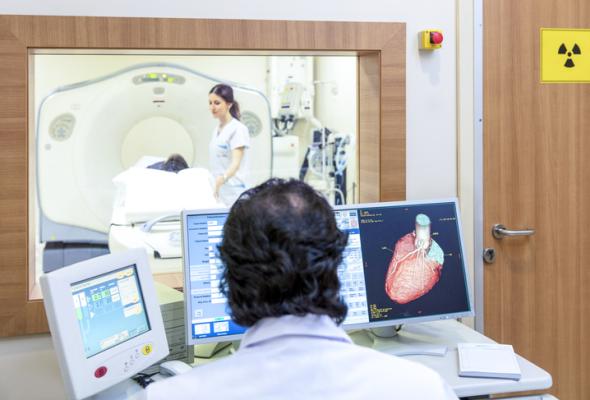
May 3, 2022 — More than 60 million magnetic resonance imaging (MRI) scans are performed worldwide each year, but imaging for the millions of patients with cardiac implantable electronic devices (CIEDs) such as pacemakers is a logistical challenge, because of concerns with how the magnetic field affects the implants.
Now, a newly published study from the University of Missouri School of Medicine reveals safe and effective reprogramming of these devices is possible, even from a remote location.
Researchers conducted an observational study of 209 patients at MU Health Care’s University Hospital who underwent remote programming of their device for MRI using Medtronic RM CareLink technology. Of those scans, 51 were performed urgently. An MRI technician started each session by contacting an off-site operator and placing a programming wand on the patient’s CIED, enabling the programmer to access the device remotely and switch to an MRI-safe mode. After completing the scan, the remote programmer returned the device to the patient’s baseline settings.
“During this study, none of the patients experienced any symptoms during the scan, no one needed any changes to the baseline settings afterward, and there were no technology issues,” said senior author Sandeep Gautam, MD, associate professor of clinical medicine. “The estimated time saved per scan was 18 to 38 minutes per patient, calculated by measuring the device representative's travel time to the MRI suite.”
Remote programming could reduce the need to reschedule MRI scans and other procedures that require device programming in case there is no device representative or other qualified personnel present on-site to perform the task.
“We believe this technology will reduce unnecessary use of health care resources and manpower,” Gautam said. “This will eventually lead to reduction in health care costs, as it will require a smaller number of personnel for device programming, eliminate travel cost and may be especially helpful in rural areas where access to health care is limited.”
Gautam said future studies are needed to evaluate the safety and efficacy of remote programming in larger patient populations, with different vendors and more diverse settings.
Gautam’s co-authors include principal investigator Sisir Siddamsetti, MD, cardiology fellow; and Alexander Shinn, DO, medical resident.
The study, “Remote programming of cardiac implantable electronic devices: A novel approach to program cardiac devices for magnetic resonance imaging,” was recently published by the Journal of Cardiovascular Electrophysiology. The authors declare no potential conflicts of interest.
For more information: https://medicine.missouri.edu/

 October 07, 2026