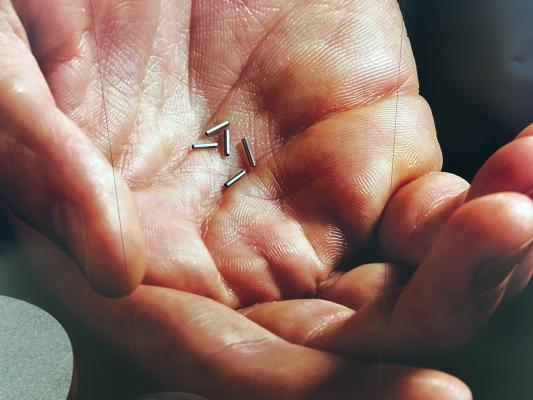
August 14, 2019 — Isoray announced a trio of studies recently reported at scientific meetings and published in medical journals that the company says illustrate the clinical utility of its Cesium Blu (formerly known as Cesium-131) treatment in radiation therapy applications. The company said the results will help grow market awareness of the range of clinical applications.
Among the recent studies are the findings of David Brachman, M.D., of the Barrow Neuroscience Institute on the impact of Cesium Blu-driven treatment on three types of recurrent brain cancers. According to the publication, Surgically Targeted Radiation Therapy: Safety Profile of Collagen Tile Brachytherapy in 79 Recurrent, Previously Irradiated Intracranial Neoplasms on a Prospective Clinical Trial, Cesium-powered GammaTile therapy offers recurrent brain cancer patients a safe and effective treatment.1 The findings involve patients suffering from high-grade gliomas, meningiomas and brain metastases. The results are important because recurrence of these hard-to-treat brain cancers has left patients with very limited options due to their prior radiation treatments. U.S. Food and Drug Administration (FDA)-cleared in July 2018, GammaTile therapy offers promising treatment for patients with these brain cancers.
Watch the VIDEO: Advancements in Radiation Therapy for Brain Cancer
Another recent study, Long Term Results from a Prospective Randomized Trial of 131Cs vs 125I Permanent Prostate Brachytherapy, was published by Manuj Agarwal, M.D., of the University of Maryland and Brian Moran, M.D., of the Chicago Prostate Cancer Center. It reported long-term follow-up data collected on Cesium-131 as compared to Iodine-125, a long-established prostate brachytherapy isotope. This long-term data with nine-year median follow-up shows comparable long-term biochemical control (prostate-specific antigen recurrence) results between Cesium-131 and Iodine-125 in these patients. The data supports Cesium-131 as an effective long-term solution for these patients and supports Cesium-131 as an optimal choice for prostate cancer patients.
The impact of Cesium-131 on recurring skull base (deep neck) cancers is the focus of a case report in the Journal of Neurological Surgery Reports by Corey Savard, M.D., of Thomas Jefferson University Hospital. The joint effort of otolaryngology, radiation oncology and neurosurgical physicians is entitled, Cesium-131 Interstitial Brachytherapy for Recurrent Malignancies of the Skull Base. Presented were two cases of the especially challenging cancers that recur in a very difficult area to treat. The authors stated that the characteristics of Cesium-131 that make it effective in treating other cancers might also make it effective in treating difficult recurring skull base malignancies. Although this is a small study and the results are early, as of the published date there were no recurrences or complications noted in either case.
For more information: www.isoray.com
References
1. Brachman D., Youssef E., Dardis C., et al. Surgically Targeted Radiation Therapy: Safety Profile of Collagen Tile Brachytherapy in 79 Recurrent, Previously Irradiated Intracranial Neoplasms on a Prospective Clinical Trial. Brachytherapy: An International Multidisciplinary Journal, May-June 2019. DOI: https://doi.org/10.1016/j.brachy.2019.04.076
2. Agarwal M., Braccioforte M.H., Amin N., et al. Long Term Results from a Prospective Randomized Trial of 131Cs vs 125I Permanent Prostate Brachytherapy. Brachytherapy: An International Multidisciplinary Journal, May-June 2019. DOI: https://doi.org/10.1016/j.brachy.2019.04.037
 October 07, 2026