May 23, 2019 — Cancer patients getting proton therapy instead of traditional photon radiation are at a significantly lower risk of experiencing side-effects from their radiation therapy, while cure rates are almost identical between the two groups. Researchers in the Perelman School of Medicine at the University of Pennsylvania conducted the largest review of its kind to evaluate whether or not patients undergoing radiation therapy at the same time as chemotherapy experienced serious adverse events within 90 days. They will present their findings at the 2019 American Society of Clinical Oncology (ASCO) Annual Meeting, May 31-June 4 in Chicago (Abstract #6521).
"We looked at grade-three side effects — including pain or difficulty swallowing, difficulty breathing, nausea or diarrhea, among others — often severe enough for patients to be hospitalized," said the study's lead author Brian Baumann, M.D., an adjunct assistant professor of radiation oncology in the Perelman School of Medicine at the University of Pennsylvania and an assistant professor of radiation oncology at Washington University School of Medicine in St. Louis. "Our clinical experience is that concurrent chemoradiation therapy patients treated with protons, rather than photons, tend to have fewer side effects. While there is some literature supporting that finding for several disease sites, we did not expect the magnitude of the benefit to be this large."
The study's senior author is James Metz, M.D., chair of radiation oncology, leader of the Roberts Proton Therapy Center at Penn, and a member of Penn's Abramson Cancer Center.
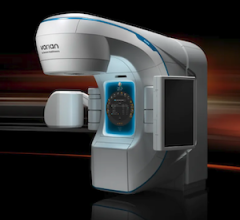
Proton therapy has a few key differences from traditional photon radiation. Photon radiation typically uses multiple X-ray beams to attack a tumor target but unavoidably deposits radiation in the normal tissues beyond the target, potentially damaging those tissues as the beam exits the body. Proton therapy is a U.S. Food and Drug Administration (FDA)-approved treatment that is an alternative radiation treatment. It directs positively charged protons at the tumor target, where they deposit the bulk of the radiation dose, with minimal residual radiation delivered beyond the target, potentially reducing side effects and damage to surrounding tissue.
For this study, researchers evaluated data on 1,483 cancer patients, 391 of whom received proton therapy and 1,092 who underwent photon treatment. All patients had non-metastatic cancer and were undergoing chemotherapy and radiation intended to be curative. Patients with brain cancer, head and neck cancer, lung cancer, gastrointestinal cancer and gynecologic cancer treated with concurrent chemoradiation were included. The primary outcome was whether or not patients experienced radiation side effects that were grade-three or higher within 90 days of treatment.
Data showed 11.5 percent (45) of proton patients experienced a grade three or higher side effect. In the photon group, 27.6 percent (301) experienced a grade three or higher side-effect. A weighted analysis of both patient groups, which controlled for other factors that may have led to differences between the patient groups, found that the relative risk of a severe toxicity was two-thirds lower for proton patients compared to photon patients.
Importantly, overall survival and disease-free survival were similar between the two groups, suggesting that the reduction in toxicity seen with proton therapy did not come at the cost effectiveness. While researchers say more study is needed, they point out that this study is the best information we have so far as randomized controlled trials continue to prove difficult to complete.
"There are several trials underway, but they are all dealing with a variety of barriers, so it will be years before we have that data. That's why the information we do have is so critical, and our findings here point to a real benefit for our patients," Metz said.
For more information: www.asco.org
Related Proton Therapy Content
VIDEO: The Role of the Physicist in Proton Therapy
 October 07, 2026