News | Contrast Media | September 12, 2017

Medical Imaging Drugs Advisory Committee (MIDAC) votes 13 to 1 to add warning of the possible risks of gadolinium retention

FDA Committee Votes to Expand Warning Labels on Gadolinium-Based Contrast Agents

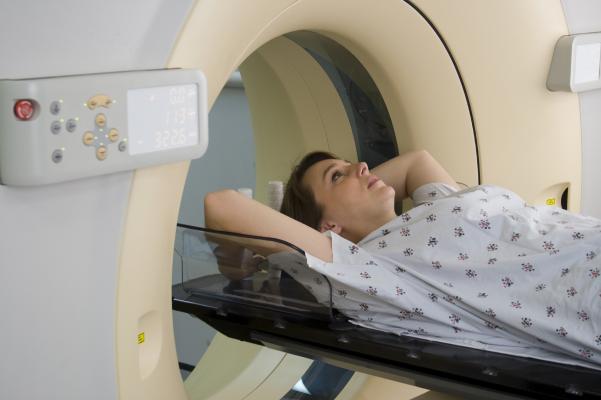
September 12, 2017 — The U.S. Food and Drug Administration’s (FDA) Medical Imaging Drugs Advisory Committee (MIDAC) voted overwhelmingly last week to recommend new labels on gadolinium-based contrast agents (GBCAs) warning of the possibility of gadolinium retention in the body following administration during magnetic resonance imaging (MRI) exams. The labels will further explain that linear GBCAs carry a greater risk than macrocyclic agents, and that there is a greater risk for certain patient populations, according to Medscape.

The meeting, held Sept. 8, brought FDA officials together with healthcare professionals, industry representatives, patients and patient advocacy groups to discuss the merit of changing the regulatory approach for GBCAs. Representatives from Guerbet, Bayer, Bracco and GE Healthcare were all present at the meeting.

Concerns have emerged about gadolinium-based contrast agents in recent years as research has suggested that gadolinium is retained in the body, particularly in the brain, after administration and could cause adverse health effects, particularly for patients with renal failure. The FDA issued a Drug Safety Communication in May 2017 titled “No Harmful Effects Identified With Brain Retention,” in which the agency said it had not identified any adverse health effects from gadolinium retained in the brain, but that it would continue its review. 

In a statement released before the Sept. 8 meeting, the FDA said, “FDA’s approach has been educational: alerting the public and clinicians to the retention phenomenon but not issuing any restrictions on use because toxic effects in humans have not been established.”

For more information: www.fda.gov


Related Content on MRI Gadolinium Retention in the Brain

FDA: No Harm in MRI Gadolinium Retention in the Brain

Recent Trends and Developments in Contrast Media

VIDEO: MRI Gadolinium Contrast Retention in the Brain

ISMRM Issues Guidelines for MRI Gadolinium Contrast Agents


Related Content

News | Neuro Imaging

July 9, 2026 — Viz.ai has announced a collaboration with Cortechs.ai to integrate Cortechs.ai's NeuroQuant and ...

Time July 10, 2026
arrow
News | MRI Breast

July 2, 2026 – Quibim has announced the European and UK launch of QP-Breast, its CE and UKCA-marked AI tool which ...

Time July 02, 2026
arrow
News | Radiology Imaging

June 15, 2026 — Lead Glass Pro, a supplier of radiation shielding products, has expanded its turnkey installation ...

Time June 18, 2026
arrow
News | Contrast Agents

June 15, 2026 – Bayer has announced that the U.S. Food and Drug Administration (FDA) approved Ambelvist (gadoquatrane) ...

Time June 16, 2026
arrow
News | PET-MRI

June 10, 2026 — UTHealth Houston has launched a state-of-the-art PET/MRI imaging service, bringing together two advanced ...

Time June 12, 2026
arrow
News | Innovative Hospitals

May 27, 2026 — Nearly two years after announcing plans for a “real-world” academic-industrial collaboration, GE ...

Time June 03, 2026
arrow
News | Cardiac Imaging

May 21, 2026 — A team of researchers from Carnegie Mellon University, in collaboration with Cleveland Clinic’s ...

Time May 22, 2026
arrow
News | Radiology Imaging

May 18, 2026 — DICO, a company specializing in the creation of distributed diagnostic infrastructure for radiology, has ...

Time May 19, 2026
arrow
News | FDA

May 18, 2026 — ACIST Medical Systems, a Bracco company, has received U.S. Food and Drug Administration (FDA) clearance ...

Time May 18, 2026
arrow
News | Imaging Software Development

April 28, 2026 — Avatar Medical has been granted FDA 510(k) clearance for Avatar Medical Vision, its software platform ...

Time April 28, 2026
arrow
Subscribe Now