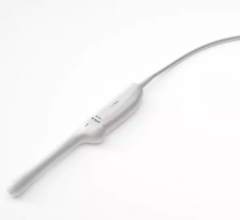
Photo courtesy of Fujifilm
According to new research by the Harvey L. Neiman Health Policy Institute, the use of follow-up imaging is significantly less when initial emergency department (ED) ultrasound examinations are interpreted by a radiologist than a nonradiologist. The study is published online in the Journal of the American College of Radiology (JACR).
The researchers used 5 percent Medicare data files from 2009 through 2014 to identify episodes of care where the place of service was “emergency room hospital” and the patient also underwent an ultrasound examination. They determined whether the initial ultrasound was interpreted by a radiologist or a nonradiologist and then summed all additional imaging events occurring within 7, 14 and 30 days of each initial ED ultrasound. The mean number of downstream imaging procedures was calculated by specialty group for each year and each study window.
“We found that of 200,357 ED ultrasound events, 81.6 percent were interpreted by radiologists and 36,788 by nonradiologists,” said Danny R. Hughes, PhD, Neiman Institute senior director for health policy research and senior research fellow.
Hughes and his colleagues discovered that across all study years, ED patients with ultrasounds interpreted by nonradiologists underwent 1.08 more imaging studies within seven days, 1.22 more imaging studies within 14 days, and 1.34 within 30 days of the initial ED ultrasound event. For both radiologists and nonradiologists, the volume of subsequent imaging decreased over time. Despite that decline, differences in follow-up imaging between radiologists and nonradiologists persisted over time.
“While the causes of this difference are not clear, the previously documented higher use of limited ultrasound examinations by nonradiologists or a lack of confidence in the interpretations of nonradiologists may potentially explain this increase in follow-up imaging examinations,” said Bibb Allen Jr., MD, FACR, lead study author and chair of the Neiman Institute advisory board.
Allen added that further analysis will be necessary to fully elucidate the causes of the discrepancy since resource use will be a critical metric in federal health care reform.
“Since emerging federal health reform includes cost and resource use as part of the Medicare Quality Payment Program, emerging patterns of care such as point of care ultrasound should include resource use in outcomes evaluation. Efforts toward improving documentation of findings and archiving of images as well as development of more robust quality assurance programs could all be beneficial.”
For more information: www.neimanhpi.org

 October 07, 2026