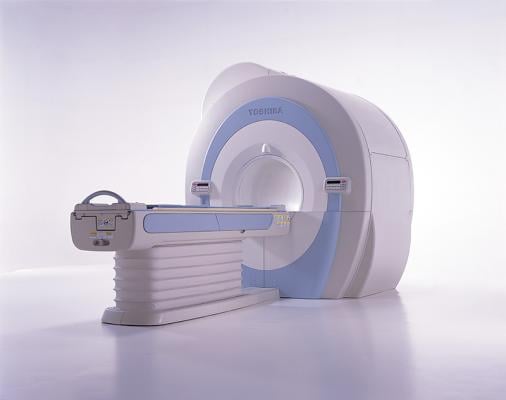
May 3, 2017 — Scientists from the National University of Singapore (NUS) have developed a novel nanodiamond-based magnetic resonance imaging (MRI) contrast agent that improves visualization of liver cancer tumors. Better and more sensitive imaging contributes towards detecting liver cancer and is crucial for planning for treatment.
Currently, there are two modes of MRI, T1-weighted and T2-weighted imaging, and patients are often given contrast agents to improve imaging quality. However, each imaging mode requires a specific class of contrast agent that cannot be used together. This poses a greater challenge in the diagnosis of liver cancer, where T2-weighted imaging is still not considered reliable, and both T1- and T2-weighted imaging can be confounded by tumour vascularity.
A research team led by Assistant Prof. Edward Chow, principal investigator from the Cancer Science Institute of Singapore at NUS and Department of Pharmacology at NUS Yong Loo Lin of Medicine, has developed a dual-mode contrast agent which enables clearer and more accurate images of tumors to be obtained in both T1- and T2-weighted MRI scans, and with lower dosages of contrast agent.
The novel dual-mode contrast agent, which was developed using nanodiamonds in combination with a manganese base, provides greater imaging contrast than existing clinical agents used to improve quality of MRIs. The team also found that liver tumors that are unable to be visualized without contrast agents become readily visible even at low dosages of the novel compound.
Contrast agents work by altering the magnetic properties of nearby water molecules, which enhances the quality of MR images. Nanodiamonds, which are carbon-based particles of two to eight nanometres in diameter, have unique chemical properties that allow them to attract water molecules. This enables them to promote proton exchange between water molecules and paramagnetic ions (i.e. contrast agents) that accumulate in tissues. As a result, T1 and T2 relaxation is enhanced, giving better quality images. This is unlike existing nanotechnology-based approaches, where nanomaterials are used to improve delivery of paramagnetic ions to specific tumor sites.
“Our experiments suggest that our dual-mode contrast agent holds great promise in improving imaging for liver cancer. We are hopeful that this advancement in nanomedicine will lead to safer and more accurate diagnosis of liver cancer. Moving forward, we plan to conduct further pre-clinical safety studies for our contrast agents, with the end goal being clinical implementation. We are also looking into using our contrast agents to improve imaging for glioma and ovarian cancer,” said Chow.
The study was conducted in collaboration with the NUS Comparative Medicine Imaging Facility and the Agency for Science, Technology and Research’s Singapore Bioimaging Consortium.
The findings of the study were published in the scientific journal Nanomedicine: Nanotechnology, Biology and Medicine in April 2017.
For more information: www.nanomedjournal.com

 October 07, 2026