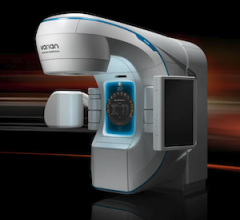

March 27, 2017 — Radiation therapists and physicians know that education can reduce anxiety before radiation treatment but lack a standardized tool. In an effort to solve this problem, a multidisciplinary team from Jefferson College of Health Professions and Sidney Kimmel Cancer Center at Thomas Jefferson University conducted a pilot study to see if a virtual environment education program could reduce some of the anxiety their patients face. They published their results in the Journal of Radiation Oncology.
“So many aspects of cancer care can produce anxiety for our patients, which can negatively impact their health and wellbeing,” said Matthew Marquess, MBA, RT(T), co-first author and program director of radiation therapy in the Radiologic Sciences Department of Jefferson College of Health Professions. “Our pilot study showed that by using a simulated environment to teach our patients about their upcoming radiation therapy treatments, we can significantly increase their understanding of the treatment and reduce their anxiety.”
To evaluate the program’s efficacy, 22 patients with prostate cancer completed a 16-question survey to assess their anxiety and comprehension. The survey measured patients’ anxiety levels associated with various aspects of care including being alone in the treatment room, treatment precision, claustrophobia, effects of daily X-rays, pain and others. Patients then received personalized education with co-first authors Marquess and Shirley Johnston, MS, CMD, RT(T)(R), director of the Medical Dosimetry program in Jefferson College of Health Professions. The team used Virtual Environment Radiotherapy (VERT) software, which is modeled after a flight simulator for radiation therapy, including life-size visualizations and three-dimensional views. After the education session, patients repeated the survey.
“Our pre- and post- survey results showed a significant decrease in anxiety and increase in comprehension,” said Robert Den, M.D., associate professor of radiation oncology in Sidney Kimmel Cancer Center. “Even better, our patients’ and their families’ comments were unanimously positive with themes of improved confidence, relief and satisfaction.”
Co-authors include Shirley Pinegar Johnston, MS, CMD, RT(T)(R); Noelle Williams, M.D.; Carolyn Giordano, Ph.D.; Benjamin Leiby, Ph.D.; Mark Hurwitz, M.D.; and Adam Dicker, M.D., Ph.D.
For more information: www.springer.com

 October 19, 2026