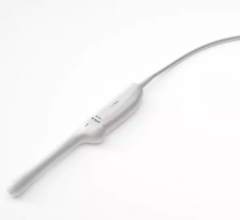
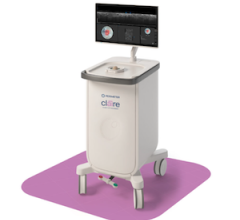
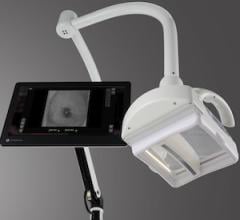
November 22, 2016 — Sigmascreening will introduce the Sensitive Sigma Paddle at the upcoming 102nd Annual Radiological Society of North America (RSNA) meeting, Nov. 27-Dec. 2 in Chicago. The Sensitive Sigma Paddle enables personalized compression for better quality mammograms without unnecessary discomfort for patients.
Each year, an estimated 125 million women throughout the world are imaged using mammography. To get the best image quality during a mammogram with the least amount of radiation, the breast needs to be flattened. This is done by compressing the breast. Under-compression can lead to blurred images, more retakes and a higher average glandular dose (AGD), while over-compression causes discomfort and unnecessary pain for the patient. British research estimates that up to 20 percent of screening-eligible women worldwide decide not to have a mammogram because of the pain. This can decrease the rate of early detection, and delay medical treatment of tumors, thus decreasing women's chances of survival.
The patented Sensitive Sigma Paddle has multiple sensors that measure each breast to optimize compression for each breast. Based on breast size and tissue stiffness, the device calculates the pressure to achieve an optimal compression of 75mmHg and allows for a highly reproducible procedure. Sigmascreening said the Sensitive Sigma Paddle is the first pressure-based compression paddle in the market which provides this pressure information real-time.
Investigational in the United States, the device is CE-marked and is actively being used at breast screening centers and hospitals in England, Germany, Sweden, The Netherlands, Belgium and Switzerland since receiving CE-mark last year.
The relationship between pressure applied during compression of the breast and screening performance was recently investigated in the study “Performance of breast screening and cancer detection depends on mammography compression,” which was presented at the 13th International Workshop of Mammographic Imaging in Malmö, June 2016, and published in Breast Imaging. Researchers computed the compression pressure applied to a series of 113,464 screening mammograms. Screening performance measures were determined for each group. Results demonstrated that compression pressures that are too low lead to a higher recall rate and false positives, and compression pressures that are too high reduce detectability of breast cancer. Cancer detection rate and the positive predictive value were optimal in the middle compression category.
For more information: www.sigmascreening.com

 October 09, 2026