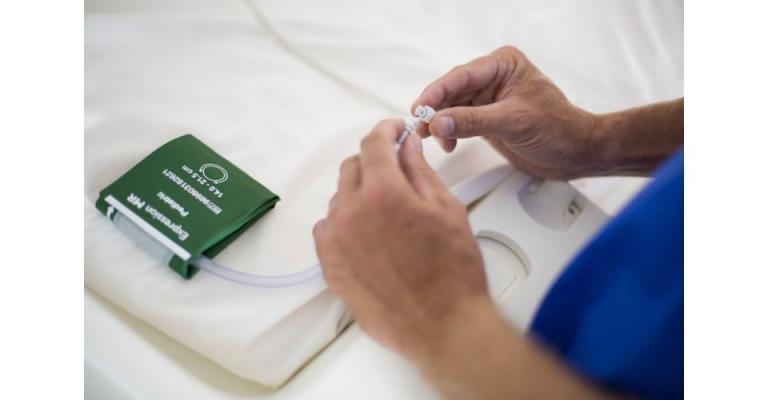
February 11, 2016 — Royal Philips announced U.S. Food and Drug Administration (FDA) 510(k) clearance for the Expression MR400, a new technology that monitors patients undergoing magnetic resonance imaging (MRI). The MR400 provides intensive care unit (ICU)-comparable, bedside-quality monitoring in the MR suite for all patients, including those with serious medical conditions or who require anesthesia.
In the MR suite, strong electromagnetic fields make it impossible for clinicians to use traditional patient monitors without causing complications with the monitor or degradation of the images. The lack of adequate monitoring is particularly problematic for patients, including children, who require anesthesia when getting an MRI. Without the ability to reliably track key vital signs, clinicians may not know a patient is in distress until it is too late.
The MR400 is designed not to create image artifacts or other interference from the electromagnetic fields when used according to the labeling, ensuring that patients receive the level of clinical care and monitoring they need. The device monitors the same vital signs that are tracked in the operating room and in the ICU, including heart rate, oxygen and carbon dioxide levels, body and surface temperatures, and blood pressure, and also includes advanced electrocardiogram (ECG) monitoring. Patients with serious medical conditions, including critical care patients or patients undergoing cardiac procedures, can also be monitored with the MR400, regardless of whether they are under anesthesia.
Similar to traditional patient monitors, the MR400 uses intelligent alarms to warn clinicians of severe patient changes, including desaturation, apnea and extreme bradycardia/tachycardia. Clinicians and staff are able to customize the monitor settings for each patient to prioritize warning signals to reduce alarm fatigue. The new monitoring system uses a touch screen with the same interface as other Philips monitors, making it easier for clinicians to view and respond to patient data.
The MR400 uses wireless technology, connects with the electronic healthcare record and shares information with IntelliBridge Enterprise to seamlessly send and receive patient information across the hospital. This ensures that all care team members have access to the same high-quality patient information.
For more information: www.philips.com

 October 07, 2026