News | Mammography | October 16, 2015

Findings demonstrate size of tumor, involvement of lymph nodes directly impact overall long-term survival

breast cancer, early detection, BMJ, Dutch study, Elaine Schattner, lymph nodes, tumor size

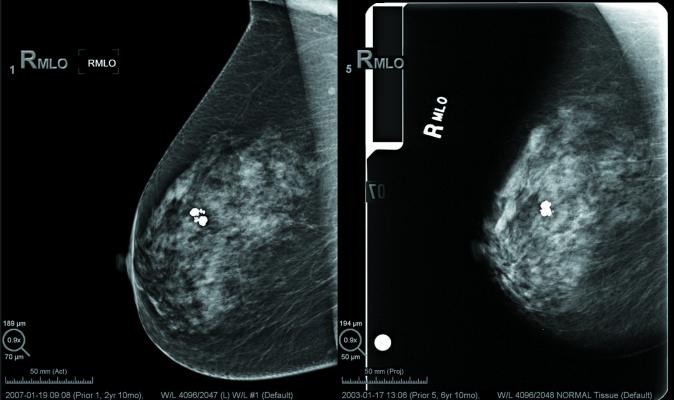
October 14, 2015 — Findings from a new population-based study in the Netherlands appear to reaffirm that early detection of breast cancer positively impacts long-term patient survival.

The study — based out of Erasmus University Medical Centre, the Netherlands Comprehensive Cancer Organization and the University of Twente and published in the BMJ — retrospectively looked at the cases of 174,000 Dutch women. The population was broken into two large cohorts: women diagnosed with breast cancer between 1999 and 2005 (80,228 women, median age 59) and women diagnosed 2006-2012 (93,569 women, median age 60). According to study authors, the two cohorts were selected due to significant changes in the screening guidelines in 2005.

Elaine Schattner, M.D., in a piece on the study for Forbes, said there are two key takeaways from the results:

  • Overall survival was significantly shorter for women whose breast cancer had spread to the lymph nodes; and
  • Larger, invasive tumors had a significantly greater impact on long-term survival than smaller invasive cancers.

Schattner also noted that data from the period of 2006-2012 indicated more early-stage diagnoses and low-grade tumors, increases in lumpectomy and increased use of medicines including hormonal treatments.

Study authors note that the Netherlands instituted a national biennial mammography screening program in 1989; the program was initially targeted for all women age 50-69 and was expanded to included women age 71-75 in 1998.

The Dutch study findings go against the modern view, held in some circles, that early detection has little value. According to Schattner, this view is largely based on a 2012 study in the New England Journal of Medicine that attributed improvements in breast cancer survival rates to better treatment options as opposed to mammography screening.

For more information: www.bmj.com


Related Content

News | Breast Imaging | Washington University

Jan. 22, 2026 — In breast cancer, a biopsy is the only diagnostic procedure that can determine if a suspicious lump or ...

Time January 29, 2026
arrow
News | Radiation Oncology

Jan. 27, 2026 — Researchers at the Icahn School of Medicine at Mount Sinai, in collaboration with other leading ...

Time January 29, 2026
arrow
News | Mammography

Jan. 16, 2026 — Vega Imaging Informatics has announced the successful curation of the world’s largest digital breast ...

Time January 19, 2026
arrow
News | Breast Imaging

Jan. 14, 2026 — VizMark has received U.S. Food and Drug Administration FDA 510k clearance for VM1, a non-metal visual ...

Time January 19, 2026
arrow
News | Breast Imaging

Jan. 14, 2026 — Susan G. Komen, the world’s leading breast cancer organization commends Assemblymember Lori Wilson (D ...

Time January 16, 2026
arrow
News | Breast Imaging

Jan. 14, 2026 — iSono Health has announced the commercial launch of ATUSA, an FDA-cleared, wearable and automated 3D ...

Time January 14, 2026
arrow
News | Women's Health

Dec. 12. 2025 — A new study has found that an individualized approach to breast cancer screening that assesses patients’ ...

Time December 17, 2025
arrow
News | Breast Imaging

Dec. 16, 2025 — Hologic, Inc, a medical technology company dedicated to improving women’s health, recently announced new ...

Time December 16, 2025
arrow
News | Artificial Intelligence

Dec. 1, 2025 — Researchers at the University of California, Berkeley and University of California, San Francisco have ...

Time December 10, 2025
arrow
News | FDA

Dec. 8, 2025 — Lunit, a provider of AI for cancer diagnostics and precision oncology, has submitted a 510(k) premarket ...

Time December 08, 2025
arrow
Subscribe Now