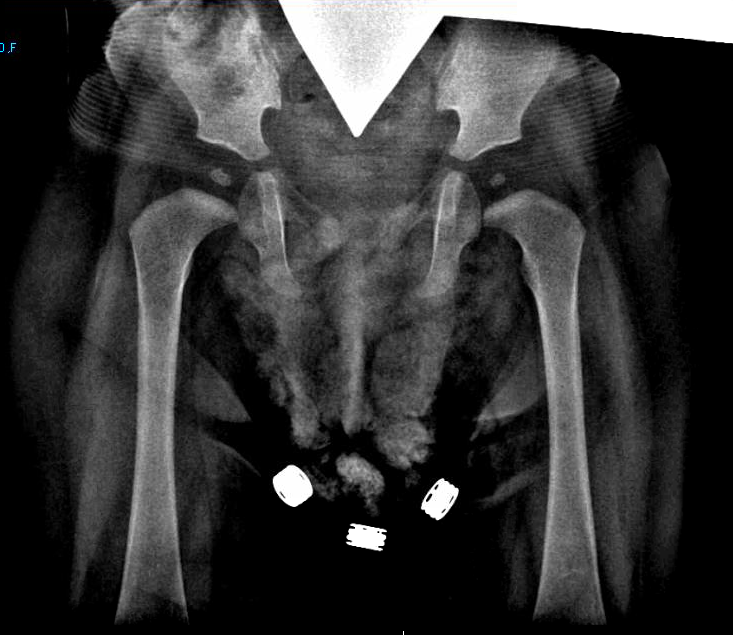
July 1, 2015 - In recent years, there has been widespread media coverage of studies purporting to show that radiation from X-rays, computed tomography (CT) scans and other medical imaging causes cancer. But such studies have serious flaws, including their reliance on an unproven statistical model, according to a recent article in the journal Technology in Cancer Research & Treatment. Corresponding author is Loyola University Medical Center radiation oncologist James Welsh, M.D., MS.
"Although radiation is known to cause cancer at high doses and high-dose rates, no data have ever unequivocally demonstrated the induction of cancer following exposure to low doses and dose rates," Welsh and co-author Jeffry Siegel, Ph.D., wrote.
Studies that have found a cancer link to medical imaging typically employ a model called "linear no-threshold" (LNT). In LNT, the well-established cancer-causing effects of high doses of radiation are simply extrapolated downward in a straight line to low doses. The LNT model assumes there is no safe dose of radiation, no matter how small.
But although LNT is used by regulators around the world, the model "is of questionable validity, utility and applicability for estimation of cancer risks," Welsh and Siegel wrote.
Contrary to the LNT model, there is compelling evidence that the human body has evolved the ability to repair damage from low-dose radiation. For example, the mutation rate caused by low-dose background radiation in the environment is 2.5 million times lower than the rate of spontaneous mutations in the body. So even if the LNT model were true, the small increase in mutations caused by low-dose radiation from medical imaging would be unlikely to overwhelm the body's defenses.
Studies purporting to find a cancer link to medical imaging radiation have other flaws besides the questionable LNT model. For example, two recent studies suggested possible increased cancer risks from low-radiation doses associated with pediatric CT scans. But these cancers likely are due to the medical conditions that prompted the CT scans, and have nothing to do with the radiation exposure, Welsh and Siegel wrote.
While many people focus on the purported risks of radiation in medical imaging, "the more significant and actual risks associated with not undergoing an imaging procedure or undergoing a more invasive exploratory surgery are generally being ignored in both the scientific literature and the popular media," the authors wrote.
For more information: www.loyolamedicine.org

 October 08, 2026