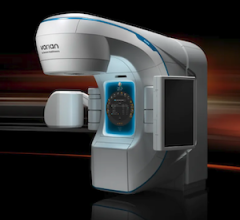
March 25, 2015 — A group of molecules in prostate-cancer cells could one day be used to distinguish which patients with rising prostate-specific antigen (PSA) levels should be treated with radiation therapy following prostate removal.
The retrospective study that led to this discovery was helmed by researchers at the Ohio State University Comprehensive Cancer Center – Arthur G. James Cancer Hospital and Richard J. Solove Research Institute (OSUCCC – James). The study suggested that a pattern of molecules called microRNA (miRNA) in tumor cells might predict patients’ response to radiation therapy.
In particular, the study suggests that two miRNAs – miR-4516 and miR-601 – in tumor cells, along with Gleason score and lymph node status, may help identify patients who might experience rising PSA after they’ve been treated with radiation therapy.
“This study is the first to demonstrate that miRNA expression in tumor cells correlates with outcome after salvage radiation therapy, paving the way for the potential use of miRNA biomarkers in prostate cancer treatment,” said first author Erica Hlavin Bell, Ph.D., assistant professor-clinical in radiation oncology.
In addition, the researchers correlated a pattern of 88 miRNAs with tumors that first recurred early after prostatectomy – within three years or less – versus tumors that recurred after three years.
The findings are published in the journal PLOS ONE.
“If validated by further studies, these findings could change clinical practice and improve the care of prostate-cancer patients,” said study leader Arnab Chakravarti, M.D., chair and professor of radiation oncology.
“Men found to have aggressive disease at the time of prostatectomy could be offered additional treatment with radiation therapy to prevent recurrence, while sparing men with slow-growing tumors,” added Chakravarti, who holds the Max Morehouse Chair of Cancer Research.
“These findings are important because it is currently hard to distinguish early which patients will benefit from radiation therapy following radical prostatectomy and which will receive no benefit,” said Bell. “Our novel microRNA panel might also shed light on the underlying mechanisms of treatment resistance in prostate cancer.”
Prostate cancer is the most frequently diagnosed cancer in men. An estimated 220,800 new cases are expected in the United States in 2015, along with 27,540 deaths from recurrent disease. Currently, rising blood levels of PSA, a protein made by the prostate gland, are used as indicators of tumor recurrence.
Removal of the prostate is widely used to treat men with early-stage disease. But up to 30 to 40 percent of these patients experience rising PSA levels after surgery, and these patients are often treated using radiation therapy.
This study analyzed preserved tumor samples from 43 prostate cancer patients who later received radiation therapy after rising PSA levels were detected following a radical prostatectomy.
The study’s key findings include:
- A new model for recurrence based on rising PSA levels was developed; the model is based on miR-4561 and miR-601, together with Gleason score and lymph node status;
- The model significantly improved prediction of response to radiation therapy over the use of Gleason score and lymph-node status alone; and
- 88 miRNAs were associated with time-to-first-recurrence after a radical prostatectomy.
Funding from the NIH/National Cancer Institute supported this research.
For more information: www.cancer.osu.edu

 October 07, 2026