News | February 19, 2015

New technology allows imaging of amyloid plaques and tau tangles in living people

Alzheimer's, tau PET tracers, positron emission tomography, dementia, research

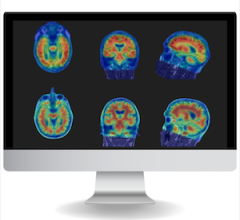
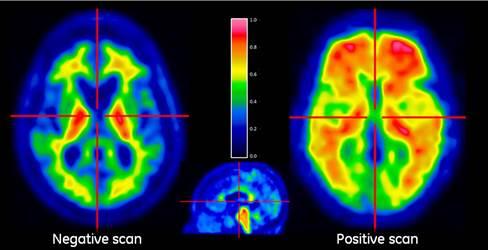
February 19, 2015 — One of the hottest topics in current Alzheimer’s research is brain scans that visualize tau pathology in living people. With the advent of positron emission tomography (PET) tracers that label neurofibrillary tangles, researchers are now able to "see" and quantify both hallmark pathologies defined by Alois Alzheimer in 1906: amyloid plaques and tau tangles. Tau tracers dominated the agenda when 340 researchers convened in Miami Beach, Florida, recently to debate the current edge in human amyloid imaging.

Previously, researchers could only detect plaques and tangles by examining brain tissue postmortem. PET also enables researchers to track pathology as people age. PET of amyloid plaques has been around for a decade, but tau PET is new.

Data is pouring in as academic and commercial labs test the current front-runner, T807/AV1451. The tracer is being validated in postmortem tissue and, as advertised, proves to bind phosphorylated tau aggregated into paired helical filaments. Researchers were excited to see the tracer bind in brain regions where neuronal metabolism crashes, and that this appears to match up with the symptoms that characterize both Alzheimer’s in its various forms and the frontotemporal dementias.

More work is needed to sort out the tracer’s technical features, but early indications of how A? and tau amyloids deposit as people age are widely considered to be highly promising. The field is getting crowded: New tau tracers debuted at the conference, and more are expected to come out soon.

For more information: www.alzforum.org

Related Content

News | ARRS

Feb. 11, 2026 —The American Roentgen Ray Society (ARRS) has announced the following radiologists, as well as their ...

Time February 13, 2026
arrow
News | Magnetic Resonance Imaging (MRI)

Feb. 6, 2026 — A state-of-the-art intraoperative MRI (iMRI) has arrived at the University of Chicago Medicine, one of ...

Time February 06, 2026
arrow
News | FDA

Jan. 29, 2026 — GE HealthCare has received 510(k) clearance from the U.S. Food and Drug Administration (FDA) for MIM ...

Time February 03, 2026
arrow
News | PET Imaging

Jan. 26, 2026 — Nuclidium, a clinical-stage radiopharmaceutical company developing a proprietary copper-based ...

Time January 27, 2026
arrow
News | Magnetic Resonance Imaging (MRI)

Jan. 20, 2026 — Hyperfine, the developer of the first FDA-cleared AI-powered portable MRI system for the brain — the ...

Time January 20, 2026
arrow
News | Radiopharmaceuticals and Tracers

Nov. 11, 2025 — The Society of Nuclear Medicine and Molecular Imaging (SNMMI) has released a position paper outlining ...

Time November 12, 2025
arrow
News | PET Imaging

Oct. 22, 2025 — Vistim Labs has announced that its flagship product, Ceregram, is officially ready for launch in ...

Time October 22, 2025
arrow
News | Nuclear Imaging

May 5, 2025 — GE HealthCare recently announced that the U.S. Food and Drug Administration (FDA) granted 510(k) clearance ...

Time May 06, 2025
arrow
News | Prostate Cancer

July 30, 2024 — Blue Earth Diagnostics, a Bracco company and recognized leader in the development and commercialization ...

Time July 30, 2024
arrow
News | Radiopharmaceuticals and Tracers

July 25, 2024 — NorthStar Medical Radioisotopes, LLC and BWXT Medical Ltd., a subsidiary of BWX Technologies, Inc ...

Time July 25, 2024
arrow
Subscribe Now