February 13, 2015 — For the first time, researchers have reversed some of the symptoms of Alzheimer’s disease in mice using magnetic resonance (MR) imaging-guided focused ultrasound.
MR imaging-guided focused ultrasound has been shown to temporarily open the blood-brain barrier (BBB), which allows for more effective delivery of drugs to the brain. In order to accomplish this, researchers use a microbubble contrast agent. The microbubbles vibrate when they pass through the ultrasound beam, temporarily creating an opening in the BBB for the drugs to pass through. In addition, this combination of ultrasound and microbubbles has been shown to increase the number of new neurons and the dendrite length.
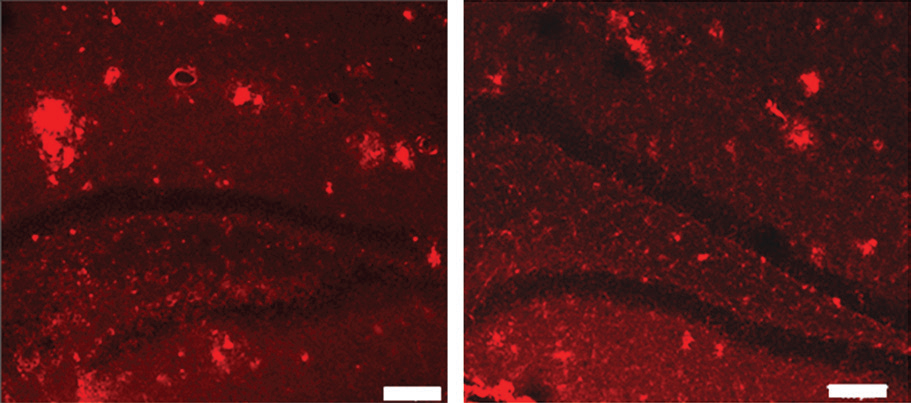
In this study, Kullervo Hynynen, Ph.D., a medical physicist at Sunnybrook Research Institute in Toronto, and his collaborators studied the effects of using MR imaging-guided focused ultrasound on the hippocampus of transgenic (TgCRND8) mice. Mice with this genetic variant have increased plaque on their hippocampus, the part of the brain that helps convert information from short-term to long-term memory; they also display symptoms similar to Alzheimer’s such as memory impairment and learning reversal. Thus, transgenic mice are used as an animal model for Alzheimer’s disease.
The researchers used MR imaging-guided focused ultrasound with microbubbles to open the BBB and treat the hippocampus of the mice. The researchers treated each side separately to be as accurate as possible in their focus of the ultrasound beam. They found the treatment led to improvements in cognition and spatial learning in the transgenic mice, potentially caused by reduced plaque and increased neuronal plasticity due to the focused ultrasound treatment. They found no tissue damage or negative behavioral changes in the mice due to the treatments in either the transgenic mice or the control (nontransgenic) mice. Both groups of mice benefited from increased neuronal plasticity, which confirms the previous research on the effects of MR imaging-guided focused ultrasound on plasticity in healthy mice.
An estimated 5.2 million Americans suffer from Alzheimer’s. It is the sixth leading cause of death in the United States and there is currently no treatment for the disease. “The results are an exciting step in the search for Alzheimer’s treatments,” said Steven Krosnick, M.D., program director for image-guided interventions at the National Institute of Biomedical Imaging and Bioengineering at NIH, “but there is more to be done. There are limitations on the memory tests that can be done on mice, and human cognition is significantly more complex. Hopefully these results will open doors to more research on how MR imaging-guided focused ultrasound could benefit cognition and perhaps be magnified by using other therapeutics in conjunction with this method.”
For more information: www.nibib.nih.gov

 October 07, 2026