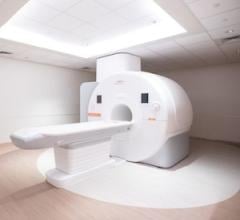
January 22, 2015 — Pain, discomfort and magnet displacement were documented in a small medical records review study of patients with cochlear implants (CIs) who underwent magnetic resonance imaging (MRI), according to a report published online by JAMA Otolaryngology-Head & Neck Surgery.
Undergoing MRI can pose concerns for patients with CI because of exposure of the internal magnet to a strong electromagnetic field. There have been previous reports of adverse events, according to background in the study.
Bo Gyung Kim, M.D., Ph.D., of the Soonchunhyang University College of Medicine, South Korea, and co-authors reviewed the medical records of 18 patients with CIs who had MRIs between 2003 and 2014 at a single center. Of the patients, 16 underwent MRI in a 1.5-T scanner and two patients had an MRI in a 3.0-T scanner. The MRIs included 12 brain scans and 18 scans of other areas of the body.
Of the 18 patients, 13 completed their MRI scan without complications (25 of 30 scans). Five patients fitted with protective head bandages could not complete their MRI because of pain: one of these patients experienced magnet displacement. Another patient tolerated the pain and discomfort of her third MRI scan, despite having gauze bandages, but experienced magnet polarity reversal. The two patients that underwent 3.0-T MRI scanning did so without bandaging and experienced no adverse events or complications (one patient had an MRI of the knee and the other patient, who had an MRI of the shoulder, did report some discomfort). Hearing-related performance was unaffected in three CI patients who had major adverse events associated with MRI scanning.
"In the present study, however, we found that seven of the 13 patients who had not undergone general anesthesia (seven of 19 MRI scans) experienced discomfort or pain during the MRI scans. One patient who had undergone general anesthesia was awakened by pain during the MRI scan and could not complete the MRI. Our data clearly demonstrate that a significant proportion of patients experienced discomfort or pain during the MRI process and were unable to complete the scans. Therefore, in addition to device safety and image quality, patient comfort should be considered when performing MRI procedures," the authors note.
For more information: http://media.jamanetwork.com

 October 07, 2026