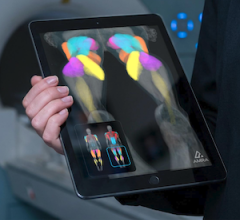
April 22, 2014 — Loyola University Medical Center is now offering patients the most advanced positron emission tomography/computed tomography (PET/CT) scanner on the market. The state-of-the-art system is improving the diagnosis and treatment of cancer, heart disease, epilepsy, Alzheimer’s disease and other conditions.
The Philips Gemini TruFlight system merges CT, which shows anatomy, with PET, which shows metabolic activity. The noninvasive exam takes just 15 or 20 minutes. The patient, lying on an open gantry, is never completely enclosed, and can interact with staff.
“It is the most patient-friendly system of its kind,” said Robert Wagner, M.D., medical director, nuclear medicine.
A CT scan combines an array of X-rays to produce a 3-D image. For example, a CT scan can show, in exquisite detail, the structural anatomy of a tumor. The PET scan, in turn, can reveal metabolic “hot spots.” Before the exam, a patient is given a radiopharmaceutical, which is absorbed by organs and tissues that use the most energy. For example, cancer cells, which use more energy than healthy cells, absorb more of the radiopharmaceutical and thus light up the image.
In addition to detecting a tumor, a PET/CT scan can show precisely where it is located, whether it is benign or malignant and whether it has spread. A PET/CT scan also can be used to assess the effectiveness of chemotherapy and determine whether a tumor has recurred.
In cardiovascular patients, a PET/CT scan can determine whether heart muscle damaged in a heart attack is still viable. The scan also can detect cardiac sarcoidosis, an inflammatory disease.
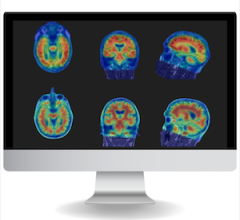
In neurological patients, a PET/CT scan can determine the location in the brain where epileptic seizures are originating. The system also can detect amyloid proteins associated with Alzheimer’s disease.
Many other applications for PET/CT scans are being developed, Wagner said. “We’re just at the tip of the iceberg.”
For more information: www.newswise.com/institutions/newsroom/225/
 October 06, 2026