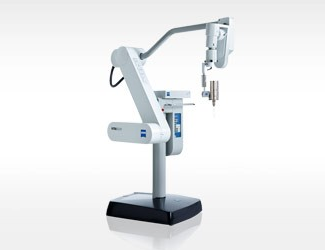
January 9, 2014 — A clinical trial for breast cancer, published in the medical journal The Lancet, shows that a single fraction of targeted intraoperative radiotherapy (TARGIT) delivered with the Zeiss Intrabeam at time of lumpectomy is non-inferior to traditional external beam radiation (EBRT) delivered over three to six weeks after breast conserving surgery, for a select group of patients.
“The most important benefit of TARGIT for a woman with breast cancer is that it allows her to complete her entire local treatment at the time of her operation, with lower toxicity to the breast, the heart and other organs,” said Jayant Vaidya, M.D., Ph.D., FRCS, international TARGIT investigators group, in the accompanying press release on the Lancet publication of the research study. “Our research supports the use of TARGIT concurrent with lumpectomy, provided patients are selected carefully, and should allow patients and their clinicians to make a more informed choice about individualizing their treatment, saving time, money, breasts and lives.”
Since 1998, the international TARGIT research group has investigated whether radiotherapy targeted to the tumor bed at the time of surgery can reduce the risk of recurrence in early breast cancer as effectively as the traditional three- to six-week EBRT.
Traditionally, whole-breast EBRT is given after lumpectomy to reduce the risk of recurrence of cancer in the breast and breast cancer mortality. EBRT typically is given over a course of three to six weeks requiring patients to receive treatment at radiotherapy centers for 20 to 30 days. In some cases, women suitable for breast conserving surgery but living far from a radiotherapy center and unable to attend daily post-surgical treatments may even undergo mastectomy as an alternative.
In the TARGIT approach, during surgery after removal of the tumor, the affected tissue in the tumor bed is irradiated from within the breast using the Zeiss Intrabeam. The TARGIT study results show that targeted intraoperative radiotherapy delivered with Zeiss Intrabeam can reduce the risk of recurrence of the cancer as effectively as the traditional course of whole breast irradiation in selected women with invasive ductal carcinoma.
The TARGIT-A trial has been to date the largest multicenter randomized clinical trial for intraoperative radiotherapy (IORT) in the field of partial breast irradiation, with 3451 patients in 33 international centers from Europe, the United States and Australia. The TARGIT-A trial followed an individualized risk-adapted approach — meaning patients who had received TARGIT at the time of surgery showed in the final pathology additional unforeseen risk factors — received supplemental EBRT, which occurred for about 15 percent of the patients. The five-year results for local recurrence and the first analysis of overall survival of the TARGIT-A trial have now been reported.
Comparing TARGIT with EBRT, the difference in five-year local recurrence between the two treatments was less than 2.5 percent and therefore considered non-inferior to standard EBRT in treating the cancer. Overall mortality was 3.9 percent with TARGIT and 5.3 percent with EBRT due to fewer deaths from cardiovascular causes and other cancers.
Based on statistical comparison of breast cancer recurrence, number of deaths and side effects of TARGIT versus EBRT the authors concluded, “TARGIT concurrent with lumpectomy within a risk-adapted approach should be considered as an option for eligible patients with breast cancer carefully selected as per the TARGIT-A trial protocol.”
A PDF of the Lancet publication of the results of the TARGIT-A study can be found here.
For more information: www.meditec.zeiss.com, www.thelancet.com
 October 09, 2026