November 1, 2013 – Image IQ, Inc. announced that findings from an orthopedic clinical study conducted by ImageIQ and Cleveland Clinic show that professional baseball pitchers with lower degrees of dominant humeral torsion, or the degree of twisting of the long arm bone running from shoulder to elbow, are more prone to severe arm and shoulder injuries. These findings, published in The American Journal of Sports Medicine, have the potential to allow players and teams to assess injury risk in the future, proactively work to prevent injuries, and make better-informed player personnel decisions.
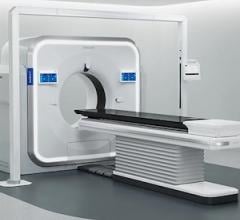
Cleveland-based ImageIQ used custom-tailored 3-D clinical image and motion analysis software to quantitatively measure joint anatomy differences in the shoulders of 25 professional pitchers from computed tomography (CT) image data provided by Cleveland Clinic. The pitchers were followed for two years, and the study recorded the number of days missed from pitching activities as a measure of the severity and incidence of the players' injuries. The study also found a trend relating lower side-to-side torsion differences with more severe upper extremity injuries.
"We were excited to work with Cleveland Clinic to bring our unique approach to orthopedic image data analysis to bear on this study," ImageIQ CEO Tim Kulbago said. "As pitchers must strike a delicate balance between mobility and functional stability, these research findings help us better understand the connection between shoulder range-of-motion and the level of injury suffered by professional baseball players, and how to predict and protect against the most severe arm and shoulder injuries. As a member of Cleveland's biomedical community and a lifelong baseball fan, that's great news."
The study's Principal Investigator, Joshua Polster, staff radiologist in the Department of Diagnostic Radiology within the Cleveland Clinic's Imaging Institute, commented: "We found that simple measurements from standard image data sets were too limited to capture the complex interplay of 3-D anatomic structures that are involved in sports injuries and other orthopedic pathologies, and we needed a more sophisticated approach. This analysis produced meaningful and reliable data for sports medicine experts and professional athletes, and will hopefully help minimize pitching injuries in professional baseball."
This study was supported by grant funding from Major League Baseball (MLB).
For more information: www.Image-IQ.com

 October 08, 2026