

Greg Freiherr has reported on developments in radiology since 1983. He runs the consulting service, The Freiherr Group.
Blog | April 10, 2013
The New Age of Personalized Medicine
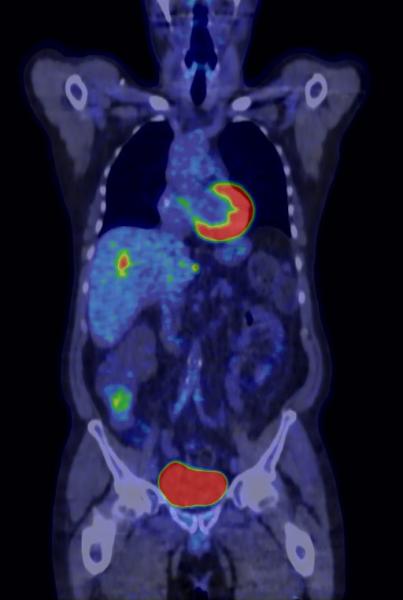
PET/CT helps bring personalized medicine within reach of practitioners. (Image courtesy of GE Healthcare)
We are seeing a semantic shift in medicine, one that is redefining personalized medicine from pie in the sky to piece of cake, undoable to doable. This redefinition uses tools within our grasp rather than tomorrow’s genomic machinations to individualize the assessment of disease risk, find its occurrence and refine treatment.
This shift is huge. It is not only ushering in a new present for medicine, but broadening the tools for making it work. Those in radiology today and in the future will comprise some of the best to personalize healthcare. They will grow in importance in the years ahead as research uncovers more of the biological changes and disease indicators that molecular imaging can target.
It’s hard to say when — or even whether — these efforts will rise to the hype generated in the late-1990s that surrounded the decoding of the human genome. With its many pieces in place, the genomic puzzle was supposed to draw back the curtains on human vulnerability, revealing the differences among individuals that explained why one person developed cancer, for example, while another did not. These developments would be upstaged by explanations of why some patients respond well to treatments when others do not, providing the means to fine-tune the diagnostic and therapeutic to best manage patients — or even fix the faults in the genetic machinery to prevent some diseases altogether.
Despite more than a decade of looking, however, physicians still do not see the genetic chinks that form in the human armor against disease, much less the tactics for straightening out dysfunctional genetic materials to prevent diseases. Research is, however, uncovering more of the biological bits and pieces associated with early disease.
Evolving these biomarkers into targets for molecular imaging is beginning to provide the means to verify disease processes early in their development. They are also showing promise as the means to monitor the impact of therapy, as well as the recurrence of these processes after therapy has initially succeeded.
Moreover, advances in molecular imaging scanners are providing the means to more precisely visualize and even quantify these processes. As research continues into the genes that may form the soft underbelly of human disease, new and more specific biomarkers will emerge. These will translate inevitably into more personalized healthcare with tailored solutions occurring in a radiological spotlight cast by molecular imaging.
But meeting these technological challenges is not sufficient. It must be accompanied by advances in education to ensure that newly developed capabilities in personalized medicine are integrated into the practice of medicine. Clinical guidelines must become living documents that go beyond diagnosis and treatment to prediction and disease monitoring. And reimbursement, the engine of adoption, must expand to cover practices not now in use.
Related Content
News | Ultrasound Imaging
Oct. 19, 2026 – GE HealthCare has introduced LOGIQ Focus, a new addition to its LOGIQ family of general imaging ...
 October 19, 2026

News | Artificial Intelligence
Oct. 7, 2026 – CARPL.ai has announced a collaboration with HOPPR that will give healthcare providers access to HOPPR's ...
October 08, 2026 
Feature | Digital Pathology | Kyle Hardner
As recently as a decade ago, pathology technology was expected to become more expensive, larger and more precise. Yet in ...
October 02, 2026 
News | ASTRO
Sept. 29, 2026 — The American Society for Radiation Oncology (ASTRO) has named Siemens Healthineers the inaugural ...
September 29, 2026 
News | Computed Tomography (CT)
Sept. 17, 2026 — Royal Philips and Southwest Mississippi Regional Medical Center (SMRMC), which serves as the hub of ...
September 24, 2026 
News | PET Imaging
Sept. 22, 2026 — Researchers from the Keck School of Medicine of USC are developing a new “plug-and-play” platform that ...
September 23, 2026 
News | Radiology Education
Sept. 16, 2026 — As urgent care centers and outpatient healthcare facilities expand their use of diagnostic imaging, the ...
September 17, 2026 
News | PET Imaging
Sept. 10, 2026 — Siemens Healthineers Molecular Imaging has completed a $43.6 million construction and renovation ...
September 14, 2026 
Feature | Artificial Intelligence | Kyle Hardner
A radiologist pulls up a chest CT scan flagged for a pulmonary nodule. One artificial intelligence (AI) tool writes its ...
September 09, 2026 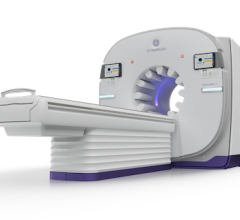
News | Nuclear Imaging
Sept. 08, 2026 — GE HealthCare has announced that StarGuide GX1, its digital 4D CZT SPECT/CT technology, is 510(k) ...
September 09, 2026 © Copyright Wainscot Media. All Rights Reserved.

Subscribe Now