June 6, 2011 — A study presented at the Society of Nuclear Medicine's (SNM) annual meeting outlines a positron emission tomography (PET) imaging method that reduces “motion artifacts” or image blurring arising from respiratory motion. Non-gated PET imaging with 4-D computed tomography (CT) may be useful for imaging patients who do not benefit from the use of respiratory gating, most notably patients with erratic breathing.
“Breathing irregularities can lead to significantly underestimated lesion activity in respiratory-gated PET imaging,” said Boon-Keng Teo, Ph.D., assistant professor of radiation oncology at the University of Pennsylvania in Philadelphia, Pa. “Non-gated PET imaging corrected with 4-D computed tomography may be more effective for imaging patients with irregular breathing. This could potentially lead to a more robust and quantitatively accurate reading of active tumors.”
Respiratory gating technologies have dramatically improved the diagnostic quality of PET imaging, which provides functional images of physiological processes occurring in the body. Sensors in respiratory gating systems placed on or around the patient monitor the phase of the breathing cycle. They then transmit information about the patient’s breathing to the scanning technology for image processing. Instead of creating one fluid image that shows so-called motion artifacts, respiratory-gated PET imaging is much like a series of photos taken during different phases of the respiratory cycle that are grouped together to create a series of images corresponding to each phase. The problem is that patients with respiratory disease, heart conditions or other serious diseases are likely to be breathing unevenly. Respiratory gating systems are designed to work with normal breathing patterns, but not with irregular respiratory cycles.
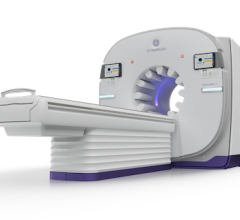
Researchers conducted phantom studies to compare respiratory-gated PET imaging with non-gated PET imaging corrected with 4-D computed tomography. CT uses X-ray technology and complex data processing to produce very high-resolution images of structural anatomy. Phantom studies were performed with inanimate objects and specialized motion devices that move in a controlled manner in order to simulate tumors in respiratory motion. The 4-D PET and CT studies were conducted in succession with a hybrid PET/CT system. Various degrees of motion irregularities were simulated to study their impact on the accuracy of 4-D PET for suppressing motion artifacts.
Results of the study show that non-gated PET with 4-D CT imaging can be an alternative to respiratory-gated PET imaging for determining tumor activity in patients with highly irregular breathing. These findings could change imaging protocols for patients with uneven breathing and potentially improve overall accuracy of tumor detection, thereby informing clinicians about appropriate treatments and perhaps even surgical planning for better cancer management.
For more information: www.snm.org
 October 06, 2026