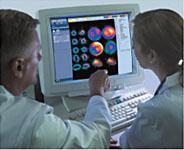
February 2, 2010 - Two protocols for reduced-dose cardiac imaging, without compromising image quality, may help enhance the performance of gamma cameras by shortening acquisition times, enabling reduced radiopharmaceutical doses and increasing image resolution. Nuclear medicine image reconstruction software maker UltraSPECT said its imaging protocols minimize radiation exposure to patients and staff, in addition to mitigating the impact of the technetium-99 (Tc-99m ) isotope shortage. The company’s FDA-cleared and CE mark-approved Xpress.Cardiac and Xpress3.Cardiac products allow the utilization of lower dose imaging protocols with no compromise in imaging acquisition times and outcomes. UltraSPECT products feature connectivity to the imaging systems of all three major nuclear medicine camera manufacturers, supporting most existing camera hardware and workstation versions. With the Xpress.Cardiac clinicians can apply the one-day rest/stress protocol, with scan times as defined by the ASNC recommendations, but with injected doses that are approximately half the doses specified by ASNC: rest: 5-6 mCi; 8-9 mCi for patients weighing more than 100 kg. Stress: 15-20 mCi; 24-27 mCi for patients weighing more than 100 kg. With the Xpress3.Cardiac physicians can apply two different protocols: the half-dose, half-time single-day rest/stress protocol, or the dual-isotope, single-day protocol. The half-dose, half-time protocol combines reduced injection doses with shortened scan times, enabling higher patient safety and comfort, while helping overcome the impact of radioisotope supply shortages and increasing patient throughput. A typical half-dose half-time same-day Tc-99m rest/stress protocol consists of: rest 5-6 mCi; 15-20 seconds per stop. Stress: 15-20 mCi; 10 seconds per stop. The one-day dual-isotope Tl-201/Tc-99m protocol combines reduced doses and shorter scan times. Reduced-dose shorter-time Rest Tl-201 imaging is followed by shorter-time reduced-dose Tc-99m stress imaging: rest: Tl-201, 2 mCi (female)/3 mCi (male); 20 seconds per stop. Stress: Tc-99m, 20 mCi (female)/30 mCi (male); 10 seconds per stop. Many users of the dose-reduction protocols enabled by UltraSPECT's image reconstruction products said they have not been impacted by the reactor shutdowns due to the more effective utilization of their limited technetium supplies. "WBR technology has been instrumental in maintaining our high patient throughput throughout the technetium shortage. With half-dose imaging performed on nearly 1,000 patients in our clinic, we have managed to minimize the effect of the reduced supply," said James Reibsane, CNMT, director of diagnostic and technical services at Berks Cardiologists Ltd., Wyomissing, Pa. UltraSPECT’s Xpress.Cardiac, Xpress3.Cardiac, and Xpress/Xact.Bone products are distributed in the United States by Cardinal Health. For more information: www.cardinalhealth.com, www.ultraspect.com

 October 07, 2026