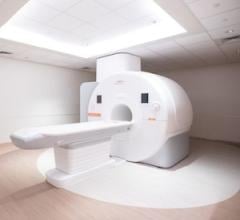
August 25, 2008 - Concerns over problems with MRIs often not being properly cleaned and leading to the spread of Methicillin resistant Staphylococcus aureus (MRSA) during radiological scans is addressed in a recently released paper titled "Preventing Infection in MRI: Best Practices for Infection Control in and Around MRI Suites."
The author of the paper, radiologist Peter Rothschild, M.D., formerly the medical director of the research laboratory at the University of California, San Francisco, addresses major concern for imaging centers in which MRSA can be carried by asymptomatic patients. Worldwide, it is estimated that up to 53 million people are asymptomatic carriers of MRSA. Of these it is estimated that 2.5 million reside in the United States. Approximately 1 percent of the U.S. population is colonized with MRSA. Both infected and colonized patients contaminate their environment with the same relative frequency. The most common source for transmission of MRSA is by direct or indirect contact with people who have MRSA infections or are asymptomatic carriers.
The morbidity and mortality of these bacteria is significant with average hospitalizations for the treatment of MRSA versus other infections extending three times longer. Additionally, the risk of death is three to five times greater for patients infected with MRSA versus methicillin sensitive Staph infections.
"Any patient lying on an imaging table could be a carrier capable of contaminating surfaces in the radiology suite," said Peter Rothschild, M.D., who is attempting to transform the MRI community's attitude concerning infection control. He adds "MRSA and other pathogens can live on and in common MRI table pads and positioners for periods as long as several months."
Patients need to ask questions what the cleaning procedures are? How old are the pads?
"At many MRI centers, there exists a false belief that merely placing a clean sheet over contaminated table pads, without actually cleaning them between patients, will somehow prevent the spread of infectious agents. What is most concerning is that very few MRI centers regularly clean their pads even once a day, much less between patients," Dr. Rothschild continued.
For more information: [email protected]

 October 07, 2026