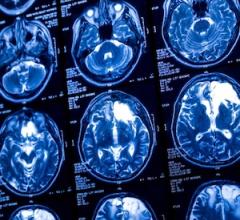
May 22, 2008 - Nassir Marrouche, M.D., and his research team from the University of Utah School of Medicine received the Eric N. Prystowsky Fellow Clinical Research award for their abstract on experimental studies showing how magnetic resonance imaging (MRI) angiograms can be effectively used during atrial fibrillation (AF) procedures.
The award was presented at Heart Rhythm 2008, held in San Francisco, May 14-17. The winning entry from Dr. Marrouche, Dr. Marcos Daccarett and their colleagues was an abstract entitled, “Quantitative Measurement and Three Dimensional Visualization of Scar Formation Following Pulmonary Vein Isolation for Atrial Fibrillation.”
“We appreciate this honor and are proud to be the first program in the country to focus on refining image-based heart ablation procedures using MRI,” said Dr. Marrouche, the director of the Atrial Fibrillation Program at the University of Utah School of Medicine.
Treatment of AF often involves radiofrequency (RF) ablation, a procedure in which the electrical signals that cause the heart to contract at a chaotic, usually rapid rate are mapped, localized, and then destroyed (i.e., ablated) using RF energy. Since MRI offers the most detailed information about normal and damaged myocardial tissue, Dr. Marrouche is investigating its use in patient screening, procedure planning, procedure navigation and localizing the causes of post-procedural complications.
The purpose of his research is to improve the curative rates and safety of RF ablation procedures. At the American College of Cardiology conference earlier this year, he presented the first study to show how MRI can be used as a precise, pre-procedure diagnostic tool to visually demonstrate AF’s progression and location. And last October, the University of Utah AF program became the first in the world to be able to ablate using a catheter custom-made to be compatible with MRI.
Dr. Marrouche has performed more than 1,000 ablation procedures, and about 90% of his patients are arrhythmia free and off heart medications within three months of their procedures. Their major complication rates are less than 0.5%, more 12 times better than the comparable 6% rate in a 2005 worldwide survey of the ablation procedure outcomes.
The Heart Rhythm Society's Eric N. Prystowsky Fellow Clinical Research award is given to the top three highest scoring abstracts submitted to the Clinical Electrophysiology, Catheter Ablation or Devices categories.
For more information: www.hrsonline.org

 October 07, 2026