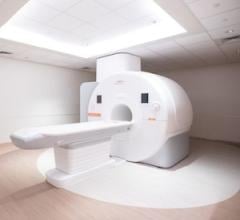
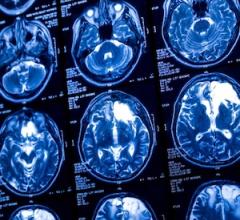
March 18, 2008 – A special type of magnetic resonance imaging (MRI) can depict changes in blood volume in the brain that often precede cancerous transformation of brain tumors, according to a new study published in the April issue of the journal Radiology.
“We found that increases in blood volume within the tumor measured noninvasively by perfusion MRI precede other markers of malignant transformation by a year or more,” said study co-author Adam Waldman, Ph.D., M.R.C.P., F.R.C.R., consultant neuroradiologist and imaging research director at Imperial College NHS Trust and honorary senior lecturer at Imperial College and University College, London.
Low-grade gliomas are primary brain tumors that grow slowly over several years. Eventually, almost all low-grade gliomas progress to high-grade gliomas, which carry a poor prognosis.
“Patients with low-grade gliomas are often young and may remain clinically well for many years, but at an unpredictable time their tumor will transform to an aggressively high-grade glioma,” Dr. Waldman said.
For the study, the researchers performed perfusion MRI on 13 patients with low-grade gliomas to determine whether relative cerebral blood volume (rCBV) changes are an indicator of future malignant transformation.
Brain tumors can bring about the formation of new blood vessels, a process known as angiogenesis. These vessels are abnormal and lead to changes in blood volume and flow. Using perfusion MRI, radiologists can detect these changes well before they become apparent on contrast-enhanced MR images.
The patients underwent perfusion MRI and contrast-enhanced MRI every six months for up to three years. Seven patients progressed to high-grade, malignant gliomas between six and 36 months. In the six patients whose disease remained stable, rCBV remained relatively stable, increasing from a mean level of 1.31 at the beginning of the study to 1.52 over the follow-up period. However, in the patients exhibiting tumor transformation, mean rCBV increased progressively from 1.94 at study entry to 3.14 twelve months prior to transformation, to 3.65 six months prior to transformation and to 5.36 at the time transformation was diagnosed.
These findings suggest that significant changes in rCBV represent an important marker of malignant change in gliomas and reflect the earliest stages of the transformation process. Further, the data support the likelihood that the cellular processes underlying malignant transformation may occur 12 months or more before visible on contrast MRI.
“We have shown that perfusion MRI provides a noninvasive means of assessing the risk of transformation in individual patients,” Dr. Waldman said. “Increasing perfusion can be regarded as an early warning sign of impending malignant transformation that can assist radiologists in identifying those patients most likely to benefit from earlier or more aggressive treatment.”
Source: “Low-Grade Gliomas: Do Changes in rCBV Measurements at Longitudinal Perfusion-weighted MR Imaging Predict Malignant Transformation?” Collaborating with Dr. Waldman were Nasuda Danchaivijitr, M.D., Daniel J. Tozer, Ph.D., Christopher E. Benton, B.Sc., Gisele Brasil Caseiras, M.D., Paul S. Tofts, Ph.D., Jeremy H. Rees, Ph.D., F.R.C.P., and H. Rolf Jäger, M.D., F.R.C.R. Journal attribution requested.
Radiology is edited by Herbert Y. Kressel, M.D., Harvard Medical School, Boston, Mass., and owned and published by the Radiological Society of North America, Inc. (RSNA.org/radiologyjnl)
Source: The Radiological Society of North America (RSNA).
For more information: www.RadiologyInfo.org and www.RSNA.org
 October 07, 2026