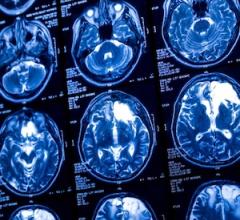
September 25, 2007 - According to a study focusing on non-mass enhancing breast lesions, appearing in the October issue of the journal Radiology, proton magnetic resonance spectroscopy (1H MRS) used in conjunction with magnetic resonance imaging (MRI) can aid radiologists in diagnosing breast cancer while reducing the number of false-positive results and invasive biopsies
“All of the cancers present in this study were identified with MR spectroscopy,” said the study’s lead author, Lia Bartella, M.D., director of breast imaging at Eastside Diagnostic Imaging in New York City.
With MR spectroscopy, which adds only 10 minutes to a standard MRI exam, the radiologist is able to see the chemical make-up of a tumor. In most cases, the results indicate whether or not the lesion is cancerous without the need for biopsy.
“Non-mass enhancing lesions frequently pose a dilemma to the radiologist when evaluating the breast for the presence of cancer, especially in premenopausal women,” Dr. Bartella said. “Potentially, the use of proton MR spectroscopy may help decrease the number of benign biopsies for non-mass enhancing lesions.”
For the study, Dr. Bartella and colleagues performed _H MRS on 32 non-mass enhancing breast lesions in 32 women, age 20 to 63. Twenty-five of the patients had lesions that had been labeled suspicious at MRI.
_H MRS can provide radiologists with chemical information about a lesion by measuring the levels of choline compounds, which are markers of an active tumor. In the study, positive choline findings were present in 15 of 32 lesions, including all 12 cancers, giving _H MRS a specificity of 85 percent and a sensitivity of 100 percent. If only the lesions with positive choline findings had been biopsied, 17 (68 percent) of 25 lesions may have been spared invasive biopsies and none of the cancers would have been missed.
“By performing MR spectroscopy of the suspicious lesion after an MRI scan, we can noninvasively see which tumors show elevated choline levels and are likely malignant,” Dr. Bartella said. “This chemical information added to the information provided by MRI can eliminate the need for biopsy to find out what the lesion is made of.”
For more information: RSNA.org/radiologyjnl

 October 07, 2026