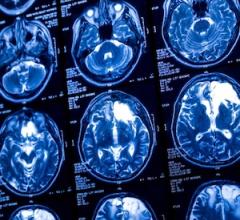
August 24, 2007 - In a paper published by the proceedings of the National Academy of Sciences, Joseph Culver, Ph.D., assistant professor of radiology at Washington University School of Medicine in St. Louis, and his colleagues report that they've improved a recently developed brain imaging technique to the point where a babie's brain will allow for more accessible imaging scans.
Using scans to determine what parts of the brain become active during a mental task, an approach known as functional brain imaging has been the source of many of neuroscience's most important recent insights into how the human brain works. But until now, it's been very difficult to apply this approach to infants. One such brain imaging technique, functional magnetic resonance imaging (fMRI), inserts volunteers into a tightly confined passage through a huge, noisy magnet, an environment that even adults find unnerving and difficult to sit still in. Similarly, computed tomography (CT) scans involve large, loud equipment, and also expose patients and volunteers to radiation exposure levels generally considered unacceptable for research studies of infants.
The DOT scanner, in contrast, uses harmless light from the near-infrared region of the spectrum and is a much smaller and quieter unit. "It's about the size of a small refrigerator, and it doesn't make any noise," Culver says. Diffuse optical brain imaging was originally developed in the 1990s by research groups in the United States, Europe and Japan. To scan a patient or volunteer with high-density DOT, scientists attach a flexible cap that covers the exterior of the head above the brain region of interest. Inside the cap are fiber optic cables, some of which shine light on the surface of the head, and some of which detect that light as it diffuses through tissue.
For more information: www.medschool.wustl.edu

 October 07, 2026