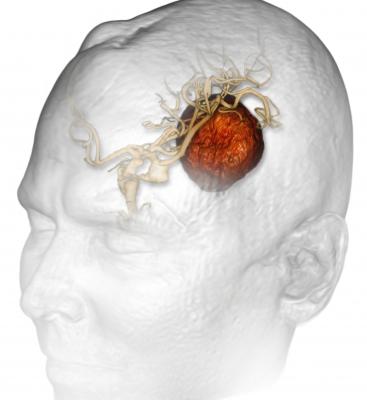
July 1, 2015 - Significant strides have been made in improving the survival of adult patients with low-grade gliomas, according to researchers at the University of California, San Diego School of Medicine. The scientists used clinical data collected over the past decade through a U.S. cancer registry for their research on the slow-growing yet deadly form of primary brain cancer. The findings are published July 1 by Neuro-Oncology: Clinical Practice.
Because of the rarity of low-grade gliomas, the disease remains understudied. The optimal management strategies for these tumors also remain controversial. Decisions of when and whether to administer radiation, what type of surgery to perform, and what type of chemotherapy to use, if any, varies widely among physicians.
"An understanding of how our treatments affect the survival of low-grade glioma patients will better enable us to help these patients," said senior author Clark C. Chen, M.D., Ph.D., vice chairman of research and academic development, Division of Neurosurgery, UC San Diego School of Medicine.
Using the Surveillance, Epidemiology, and End Results (SEER) database, a national cancer registry sponsored by the National Cancer Institute, Chen's team demonstrated that the median survival of patients afflicted with low-grade gliomas increased from 44 months (in 1999) to 57 months (in 2010). This is the first time that such increased survival has been reported.
The study suggests that the survival improvement is due to the development of more effective chemotherapies. Interestingly, the improved survival occurred despite a decreased use of radiation therapy at the time when low-grade glioma is first diagnosed.
"The decrease in the use of radiation started in 2005, concomitant to the publication of an important European randomized control study that demonstrated no significant survival benefit whether radiation was delivered at the time of diagnosis or later in the clinical course," said Xuezhi Dong, the study's first author.
While many previous studies suggest that complete excision of low-grade gliomas is associated with longer patient survival, this latest study found that only about a third of U.S. patients underwent complete surgical resection. Notably, this number remained unchanged throughout the past decade.
"The lack of improvement in surgical resection is likely limited by the availability of technologies, such as intra-operative MRI [magnetic resonance imaging], to allow surgeons to perform maximal surgical resection," said Bob S. Carter, M.D., Ph.D., chief of neurosurgery at UC San Diego Health. "The completion of an advanced surgical suite with an intra-operative MRI at Jacobs Medical Center in 2016 at UC San Diego Health will afford us an unprecedented opportunity to achieve maximal surgical resection of low-grade glioma and set forth new surgical standards for the care of this patient population."
For more information: www.som.ucsd.edu
 October 07, 2026