May 3, 2017 — Kidney cancer patients may soon have an alternative to traditional treatments, according to new research at UT Southwestern Medical Center’s Kidney Cancer Program of the Harold C. Simmons Comprehensive Cancer Center.
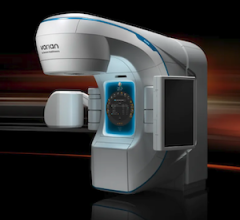
Their recent study showed that treating metastatic kidney cancer with an advanced, focused form of radiation called stereotactic ablative radiation therapy achieves more than 90 percent control of metastases.
“This study shows that stereotactic radiation provides a good noninvasive alternative to conventional treatment, and that it effectively controls the disease,” said Raquibul Hannan, M.D., Ph.D., assistant professor of radiation oncology, co-leader of the Kidney Cancer Program and senior author of the study. “It may also offer an alternative to patients who are not candidates for surgery due to the number and location of the metastases.”
The standard of care for metastatic renal cell carcinoma is systemic therapy, such as targeted drugs or immunotherapy, which often has significant side effects like fatigue, high blood pressure and rash. According to Hannan, the new study shows that some of these patients can be treated with stereotactic radiation therapy with the goal of being cured, or to delay systemic therapy, allowing patients to enjoy a better quality of life without the side effects of the drugs.
“This study, which represents, possibly, the largest experience reported in the medical literature, may also help medical oncologists, since stereotactic radiation could be used for patients who have limited sites of progression while receiving systemic therapy,” said James Brugarolas, M.D., associate professor of internal medicine and leader of the Kidney Cancer Program.
The study is published in the International Journal of Radiation Oncology, Biology, and Physics.
The research was conducted in the Kidney Cancer Program, one of two programs in the country to be recognized with an $11 million SPORE (Specialized Program of Research Excellence) from the National Cancer Institute. As part of the SPORE, researchers are improving the ways in which radiation is given by evaluating combinations with drugs and identifying those tumors that are most likely to respond. In particular, investigators are evaluating combinations with immunotherapy, iSABR – immunotherapy and stereotatic ablative radiation therapy.
Nearly 400,000 Americans are now living with a diagnosis of kidney cancer and more than 60,000 people are expected to be diagnosed with kidney cancer this year, according to the National Cancer Institute.
Five-year survival rate averages run from 81 percent for stage 1, when cancer is contained in the kidney, to about 53 percent for stage 3, when it has spread beyond the kidney, and just 8 percent for stage 4, when the cancer spreads to more distant parts of the body or other organs. However, for stage four patients, 5-year survival rates at the UT Southwestern’s Kidney Cancer Program are double national benchmarks.
For more information: www.redjournal.org

 October 01, 2026