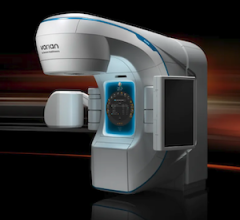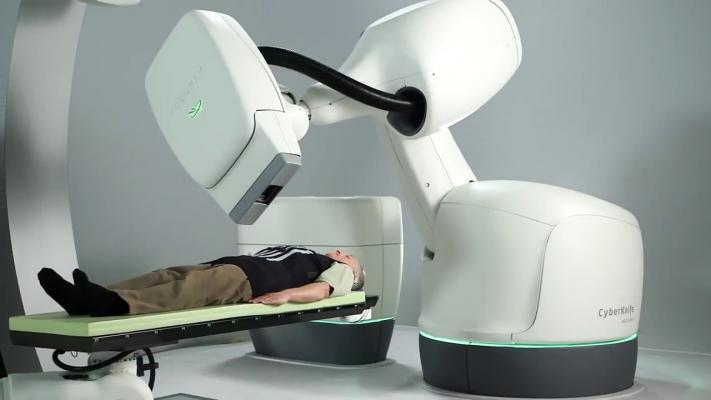
December 11, 2019 — Accuray Incorporated announced today Stanford University Medical Center has selected a second CyberKnife M6 System to expand access to precise radiosurgery treatments to more of their patients. With its installation, the hospital's clinicians will have a CyberKnife System dedicated to the treatment of diseases in the brain and base of the skull, making it possible for the existing system to be used to treat more patients with tumors elsewhere in the body. The new CyberKnife System will be installed at the Stanford Neuroscience Health Center, a comprehensive facility offering integrated outpatient services in one location designed to provide more accurate diagnoses, organized care, better quality of life and improved outcomes for the patient.
"We value our long-standing partnership with the Stanford clinical team, one of the most respected in the world, and are proud that they are using the CyberKnife System to improve the outcomes of people diagnosed with serious medical conditions," said Joshua H. Levine, president and CEO at Accuray. "At Accuray, our goal is to provide clinicians with a system that makes it as easy as possible for them to provide the best possible outcome for their patients, based on each patient's unique condition. Over the course of our relationship with the Stanford team, they have acquired four CyberKnife Systems, reinforcing their continued confidence in the system and demonstrating that we are delivering on our goal."
"This year marks 25 years since the world's first patient was treated with a prototype CyberKnife System at Stanford. While clinicians at our hospital have used some version of the system since that time, a dedicated system located in our neuroscience center will enable us to provide precise and accurate SRS treatments to significantly more patients," said Steven D. Chang, M.D., co-director, Stanford Surgical Neuro-Oncology Program, Co-Director, Stanford CyberKnife Program, Stanford University School of Medicine. "The introduction of the CyberKnife System changed the way diseases or tumors in the head are treated. The system established multi-session or fractionated treatment as a standard for cranial stereotactic radiosurgery, a technique that has brought meaningful benefits to patients and the medical field."
The CyberKnife System was designed to deliver stereotactic radiosurgery (SRS) without a rigid frame bolted to the patient's head, which some other systems use to prevent movement during treatment. It provides a precise and effective option for patients with diseases or tumors in the brain requiring single or multi-session treatments, and younger patients who would not be candidates for treatment with a fixed head frame. Since its introduction, advanced new functionality, including the VOLO Optimizer, has been added to the CyberKnife System, enabling clinicians to treat patients significantly faster, without sacrificing the precision or accuracy for which the system is known.
SRS typically involves the delivery of a single high-dose radiation treatment or a few fractionated radiation treatments (usually up to five treatments) to destroy all tissue within the tumor. The ability to deliver high doses of radiation in a single or a few fractions is called hypofractionation. Hypofractionation can only be undertaken with systems that are able to target the tumor with extreme precision and accuracy, as the CyberKnife System can, while minimizing delivered dose to surrounding healthy tissue. The CyberKnife System has been proven to deliver radiation to the skull with sub-millimeter accuracy (to within 1.0mm of the target)1, meaning minimal radiation is delivered to the surrounding healthy brain tissue.
The CyberKnife System is routinely used to treat conditions in the brain including, but not limited to, benign and malignant primary tumors, brain metastases, trigeminal neuralgia, acoustic neuromas and arteriovenous malformations (AVMs). CyberKnife radiosurgery is even used to treat complicated neurosurgical cases, while maximally sparing brain tissues involved in important functions such as hearing and vision.
For more information: www.accuray.com

 October 07, 2026