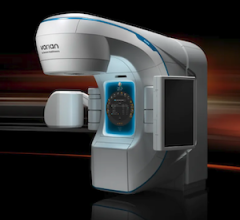
Intraoperative Radiotherapy (IORT) is used for accelerated, partial breast irradiation.
June 9, 2010 - A single radiation dose during intraoperative radiotherapy (IORT) is at least as effective as longer post-operative treatments, according to results from a study presented at the American Society of Clinical Oncology (ASCO) meeting, held June 4-8 in Chicago and published in the Lancet June 5.
In the study, TARGIT (targeted intraoperative radiotherapy), the radiation therapy is confined to the area of the breast where the tumor has been removed. Researchers reported that TARGIT is as effective at preventing breast cancer recurrence as whole breast radiotherapy and can be completed in one hospital visit.
After surgery to conserve the breast, 90 percent of cancer recurrences occur very near to where the removed tumor was (index quadrant), despite the presence of multicentric cancers elsewhere in the breast. Researchers suggested restriction of radiation therapy to the site of the tumor bed during surgery may be suitable for selected patients. The authors compared targeted intraoperative radiotherapy with the conventional policy of whole breast external beam radiotherapy.
The trial enrolled women aged at least 45 years with invasive ductal breast carcinoma undergoing breast-conserving surgery were enrolled.
A total of 1,113 patients were randomly allocated to targeted intraoperative radiotherapy and 1,119 were allocated to external beam radiotherapy.
Of 996 patients who received the allocated treatment in the targeted intraoperative radiotherapy group:
- 854 (86 percent) received targeted intraoperative radiotherapy only
- 142 (14 percent) received targeted intraoperative radiotherapy plus external beam radiotherapy
There were 1,025 (92 percent) patients in the external beam radiotherapy group received the allocated treatment.
At four years, there were:
- Six local recurrences (of cancer) in the intraoperative radiotherapy group
- Five local recurrences (of cancer) in the external beam radiotherapy group
Occurrence rates in the two groups were similar; 1-20 percent in the targeted intraoperative radiotherapy and 0-95 percent in the external beam radiotherapy group.
The researchers found targeted intraoperative radiotherapy almost completely avoids irradiation of the intrathoracic structures such as the heart, lung, and oesophagus. Consequently, the damage to these structures, which can occur even with modern external beam radiotherapy, will have been avoided.
They wrote in their conclusion: "For selected patients with early breast cancer, a single dose of radiotherapy delivered at the time of surgery by use of targeted intraoperative radiotherapy should be considered as an alternative to external beam radiotherapy delivered over several weeks."
Reference: Vaidya, J., et al. "Targeted intraoperative radiotherapy versus whole breast radiotherapy for breast cancer (TARGIT-A trial): an international, prospective, randomised, noninferiority phase 3 trial." The Lancet. June 5, 2010. DOI:10.1016/S0140-6736(10)60837-9
For more information: www.thelancet.com

 October 09, 2026