Getty Images
November 29, 2023 — The Radiological Society of North America (RSNA) has announced the results of the “RSNA Abdominal Trauma Detection AI Challenge.”
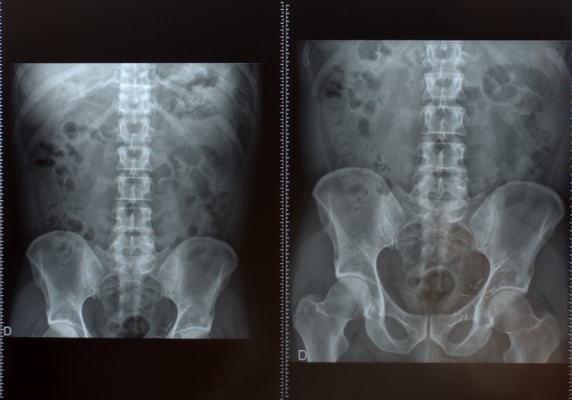
Organized by RSNA in collaboration with the American Society of Emergency Radiology (ASER) and the Society for Abdominal Radiology (SAR), the challenge gave researchers the task of building artificial intelligence (AI) models that detect severe injury to the internal abdominal organs, as well as any active internal bleeding.
The latest in a series of research competitions that RSNA has conducted since 2017, the RSNA Abdominal Trauma Detection AI Challenge represents the Society’s most ambitious AI challenge to date, encompassing detection and classification of traumatic injuries across multiple organs, including the liver, spleen, kidneys, and bowel. The international imaging dataset is the first multiphasic dataset that RSNA has assembled for a challenge and is one of the largest and most varied of its kind, including detailed clinical labels, radiologist annotations and segmentations.
“The dataset is annotated at multiple levels, including the presence of injuries in four solid organs with injury grading, image level annotations for active extravasations and bowel injury, and voxelwise segmentations of each of the potentially injured organs,” said Jeff Rudie, M.D., Ph.D., emergency radiologist and Scripps Clinic and adjunct assistant professor in the Department of Radiology at the University of California, San Diego.
To create the ground truth dataset, the challenge planning task force collected imaging data sourced from 23 sites in 14 countries on six continents, including more than 4,000 CT exams with various abdominal injuries and a roughly equal number of cases without injury.
The challenge, launched over the summer and hosted on a platform provided by Kaggle, Inc. (an Alphabet company), attracted 1,125 teams from around the world. Competing teams attempted to develop machine learning models that matched radiologists’ performance in detecting, locating and classifying the severity of abdominal injuries. The competition phase ended in October.
The prize-winning solutions were then reviewed by a team of volunteer AI experts to confirm the results. The nine teams submitting the highest-scoring algorithms shared in $50,000 total prize money.
The winning teams in the RSNA Abdominal Trauma Detection AI Challenge are:
- Team Oxygen
- On Strike
- [Aillis.jp] Yuji Ariyasu
- Sheep
- Sushi Master
- wangh
- Ian Pan
- [Rist] Happy1650
- Tattaka + yu4u
Winners will be recognized in the AI Theater on November 27th at 4 p.m. CT during RSNA’s 109th Scientific Assembly and Annual Meeting at McCormick Place Chicago (RSNA 2023, Nov. 26 – 30).
Nearly 5 million people die each year as a result of traumatic injury, according to the World Health Organization. Abdominal trauma often causes damage to the internal organs, which may result in internal bleeding and injuries to the kidneys, spleen, liver and bowel. Rapid and accurate detection and classification of injuries is key to effective treatment and favorable patient outcomes.
“The artificial intelligence models developed as part of this challenge have significant potential to advance patient care by assisting radiologists and other physicians to detect and grade different traumatic abdominal injuries, which is a particularly difficult task, requiring a lot of careful image review,” Dr. Rudie said.
For more information on RSNA AI challenges, visit RSNA.org/AI-image-challenge or contact [email protected].
 October 19, 2026