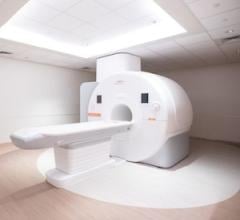
October 22, 2013 — Joint research from the University of Alabama at Birmingham and Auburn University indicated that magnetic resonance imaging (MRI) brain scans show signs of autism that could eventually support behavior-based diagnosis of autism and effective early intervention therapies. The findings appeared online in Frontiers in Human Neuroscience as part of a special issue on brain connectivity in autism.
“This research suggests brain connectivity as a neural signature of autism and may eventually support clinical testing for autism,” said Rajesh Kana, Ph.D., associate professor of psychology, University of Alabama and the project’s senior researcher. “We found the information transfer between brain areas, causal influence of one brain area on another, to be weaker in autism.”
The investigators found that brain connectivity data from 19 paths in brain scans predicted whether the participants had autism with a 95.9 percent accuracy rate.
Kana, working with a team including Gopikrishna Deshpande, Ph.D., MRI Research Center at Auburn University, studied 15 high-functioning adolescents and adults with autism, as well as 15 typically developing control participants ages 16-34 years. Kana’s team collected all data in his autism lab at UAB that was then analyzed using a novel connectivity method at Auburn.
The current study showed that adults with autism spectrum disorders processed social cues differently than typical controls. It also revealed the disrupted brain connectivity that explains their difficulty in understanding social processes.
“We can see that there are consistently weaker brain regions due to the disrupted brain connectivity,” Kana said. “There’s a very clear difference.”
Participants in this study were asked to choose the most logical of three possible endings as they watched a series of comic strip vignettes while a functional MRI scanner measured brain activity.
The scenes included a glass about to fall off a table and a man enjoying the music of a street violinist and giving him a cash tip. Most participants in the autism group had difficulty in finding a logical end to the violinist scenario, which required an understanding of emotional and mental states. The current study showed that adults with autism spectrum disorders struggle to process subtle social cues and altered brain connectivity may underlie their difficulty in understanding social processes.
“We can see that the weaker connectivity hinders the cross-talk among brain regions in autism,” Kana said.
Kana plans to continue his research on autism.
“Over the next five to 10 years, our research is going in the direction of finding objective ways to supplement the diagnosis of autism with medical testing and testing the effectiveness of intervention in improving brain connectivity,” Kana said.
Autism is currently diagnosed through interviews and behavioral observation. Although autism can be diagnosed by 18 months, in reality, earliest diagnoses occur around ages 4-6 as children face challenges in school or social settings.
“Parents usually have a longer road before getting a firm diagnosis for their child now,” Kana said. “You lose a lot of intervention time, which is so critical. Brain imaging may not be able to replace the current diagnostic measures, but if it can supplement them at an earlier age, that’s going to be really helpful.”
The findings of this study build on Kana’s research collaborations with Auburn that began in 2010. Lauren Libero, graduate student in the Department of Psychology, University of Alabama, assisted in the research.
For more information: www.frontiersin.org
 October 07, 2026