Photo: Raidium
Dec. 1, 2025 — At RSNA 2025, Raidium is introducing its new AI-native PACS Viewer powered by Curia, the first Foundation Model dedicated to radiology. This multimodal, multitask, multi-organ model, trained on a dataset of over one billion images, powers the viewer with unprecedented capabilities. It can interpret an entire imaging exam for any modality (CT, MRI,…), automatically contextualize information and execute complete workflows much like a team of radiologists.
With this release, Raidium marks the beginning of a new era where radiology consoles are no longer a simple visualization tool. They become a clinical interface augmented by an interactive, promptable Foundation Model capable of executing full action sequences from a single request — while keeping the radiologist firmly in the loop. The system has been developed in alignment with U.S. clinical expectations and is designed to support future regulatory pathways. Welcome to the era of General Intelligence in Radiology (AGI)!
This also marks Raidium’s entry into the U.S. market, supported by the relocation of its CEO, Dr. Paul Hérent, to the United States — a strategic move aligned with growing U.S. demand and existing collaborations with leading cancer centers.
Dr. Paul Hérent, radiologist, CEO and co-founder of Raidium, explains: “At RSNA 2025, we are introducing a new generation of radiology workstation: an AI-native PACS designed as a clinical interface augmented by a high-performance Foundation Model. The goal is not to replace the radiologist, but to provide a reliable, interactive copilot capable of executing an entire workflow from a single prompt. This is a major step toward true general intelligence in radiology — and toward faster, more precise, and more reproducible practice.”
A Virtual and Interactive Cockpit for Radiologists
The pressure on radiologists is rising: exploding exam volumes, the expansion of 3D modalities, increasingly complex protocols and fragmented software ecosystems. Despite the proliferation of first-generation AI, most tools remain monotask and poorly integrated, generating workflow interruptions and limited practical value.
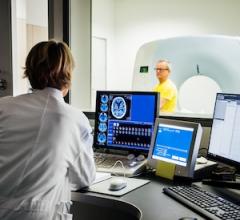
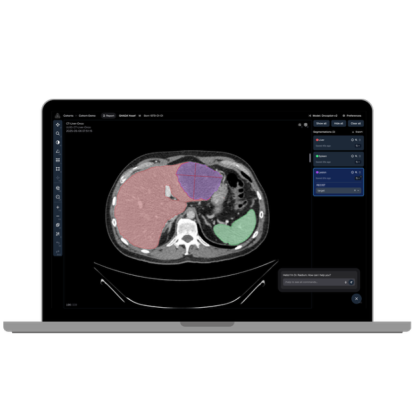
Raidium’s new viewer offers native interaction with the AI-based Foundation Model. From a unified interface, radiologists can trigger tasks through visual prompting or text prompts, enabling instant 3D segmentations, exam comparisons, advanced measurements or structured reporting.
The radiologist remains fully in control: every action is editable, transparent and traceable. The console becomes a true AI cockpit, where repetitive tasks are delegated and advanced analyses finally become accessible in real time.
Curia: from an extensively trained, unified Foundation Model to AGI-based Radiology Intelligence: Curia is a Foundation Model trained on more than one billion clinical images including routine imaging exams and full-body CTs and MRIs.
This scale enables capabilities never before unified within a single system:
- Full anatomical understanding across CT and MRI
- Native cross-modality generalization, without organ training
- Advanced behaviors (few-shot learning, longitudinal alignment, anomaly classification, response prediction)
- Execution of full task chains via visual or text prompting (3D segmentation, measurements, propagation, temporal comparison, structuring)
Curia powers the new viewer as a generalist system capable of handling any organ, protocol, or specialty with a unified base intelligence. It represents the first step toward a radiology-focused AGI capable of understanding, contextualizing and executing complex workflows in a coherent manner.
In benchmarks spanning 19 radiology tasks including anatomy, oncology, infectious diseases, degenerative disorders and emergency imaging, Curia consistently outperforms published baselines. Its performance matches or exceeds that of senior radiologists, with an average prediction rate of 89.3% vs. 79.1% for experts.
Unifying Clinical Routine and Advanced Research
The viewer supports both daily clinical workflows and advanced academic research in a single environment. Hospitals benefit from faster, more reproducible, better-structured readings. Academic centers gain an interactive instrument to accelerate validation, unify cohorts and explore new Biomarkers with scientific rigor.
A Validated Solution in Oncologic Imaging
Oncology is Raidium’s first deep-dive, embodied in ONCOPILOT, its dedicated tumor-analysis solution. Leveraging the Foundation Model’s capabilities, ONCOPILOT performs high-precision 3D tumor segmentation, automatic longitudinal tracking, total tumor burden analysis, and even survival prediction based on internal representations. ONCOPILOT covers seven organs and opens new possibilities for oncology departments and clinical research.
Raidium’s development follows an ambitious international trajectory. Designed and trained in Europe, in partnership with leading clinical centers (Centre d’Imagerie du Nord, France), Raidium has collaborated with key institutions such as the Rothschild Foundation and the Institut de Cancérologie de l’Ouest.
This momentum now expands into the United States. Dr. Paul Hérent, radiologist, CEO and co-founder, has relocated to the U.S. to accelerate Raidium’s scientific and operational expansion. This move reflects strong and growing U.S. interest: Raidium is already working with top academic and cancer research centers and has demonstrated its scientific excellence through multiple publications.
Radium will be showing the PACS viewer at the RSNA 2025 in Booth 3965.
 September 25, 2026