September 9, 2019 — Philips and non-profit organization PURE (Point-of-care Ultrasound in Resource-limited Environments) highlighted a tele-ultrasound mentorship program to provide much needed diagnostic ultrasound training to health workers in Rwanda. Expert training and mentorship in point-of-care ultrasound imaging supports Rwanda’s front-line primary and emergency care system and improves access to care for its citizens.
Ultrasound is considered to be one of the most important technologies to improve access to care in limited resource settings. This is particularly relevant in many practice settings across Africa, which bears 25 percent of the global burden of disease but has less than 2 percent of the health workers [1]. PURE — which is dedicated to enhancing ultrasound education and use in the developing world — has been working in Rwanda since 2011 to provide ultrasound training. However, there are many barriers to overcome when implementing an ultrasound training program in a resource-scarce setting that is thousands of miles away.
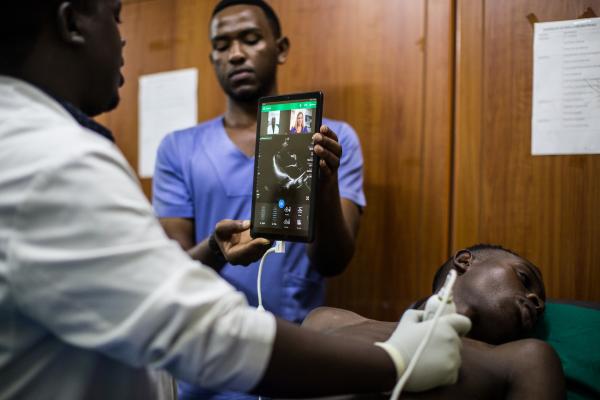
Philips Lumify with Reacts tele-ultrasound is helping PURE to break down some of those barriers. Leveraging the live-streaming tele-ultrasound capabilities of Philips’ Lumify with Reacts (a portable point-of-care ultrasound solution), the PURE mentoring program in Rwanda connects a team of Europe and U.S.-based physicians that are experts in point-of-care ultrasound with emergency medicine residents at the University Hospital of Kigali. Rwanda is helping to lead in access to universal healthcare coverage and in the development of emergency medicine as a specialty in East Africa. The doctors that are trained by PURE act as ultrasound ambassadors who can train primary care and emergency medical workers throughout the rest of the country and beyond.
“The Rwandese healthcare system has a rapidly developing emergency care infrastructure but still experiences challenges with limited rapid diagnostic capabilities, yet diagnostic imaging is essential in providing specialist-level care for the majority of acute illnesses and injuries presenting,” said Trish Henwood, M.D., president and co-founder of PURE and a specialist in emergency medicine and ultrasound. “The goal of this new tele-ultrasound mentorship program is to get our mentors and mentees better connected, helping to greatly increase the number of physicians we can train, and sustainably develop ultrasound expertise at the point-of-care throughout Rwanda.”
“The role of point-of-care ultrasound in improving emergency medicine in Rwanda is really important. We have a limited number of radiologists that we can call on to perform scans, and as a result there is often a delay in providing care to patients,” said Vincent Ndebwanimana, M.D., emergency care physician at the University of Rwanda. “Now I can make the emergency diagnosis myself so that I can much better fulfil my responsibility as an emergency physician.”
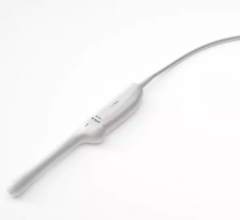
Philips’ Lumify with Reacts point-of-care ultrasound solution, which works in conjunction with a compatible smartphone or tablet, is what the company calls the world’s first ultra-portable ultrasound device with advanced telehealth capabilities. The Reacts communications platform enables two-way audio-visual calls with live ultrasound streaming, so both parties can simultaneously view the live ultrasound image and probe positioning, while discussing and interacting at the same time.
Lumify with Reacts is already an integral part of Philips’ outreach kit for its Community Life Center program, which aims to improve community and primary health across Africa by providing key tools and services for the continent’s health workers and midwives.
For more information: www.usa.philips.com/healthcare
Reference
1. Naicker S., Plange-Rhule J., Tutt R.C., et al. Shortage of healthcare workers in developing countries--Africa. Ethnicity & Disease, Spring 2009.

 October 07, 2026