News | Molecular Imaging | July 17, 2015

Researchers in Oregon report 88.9 percent sensitivity with Dilon Molecular Imaging System

Dilon, molecular breast imaging, MBI/BSGI, ILC, invasive lobular carcinoma

July 17, 2015 - Molecular breast imaging (MBI/BSGI) has been proven to be a highly sensitive imaging technique for the diagnosis of invasive lobular carcinoma (ILC), a position supported by a recent publication in the Journal of the American Medical Association Surgery. Physicians at the Legacy Cancer Institute in Portland, Oregon, reported a sensitivity of 88.9 percent for MBI/BSGI in diagnosing ILC, a difficult-to-diagnose breast cancer.

This study was a retrospective review of a prospectively maintained imaging registry at the institution in the course of six years. The analysis was conducted with almost 700 patients who underwent the BSGI procedure, which to date makes it the largest pool of data on molecular imaging of ILCs. The results show that BSGI has a slightly higher sensitivity for the detection of ILCs than for the detection of invasive ductal carcinomas (IDCs), while the specificities for both diseases are comparable. BSGI was also reported to detect additional cancers in patients with ILC. BSGI was found to have advantages over magnetic resonance imaging (MRI), as it is easier to interpret, better tolerated by patients and much less costly. The group of physicians concluded that BSGI has high sensitivity and specificity and is an excellent adjunctive imaging tool for patients with newly diagnosed ILCs.

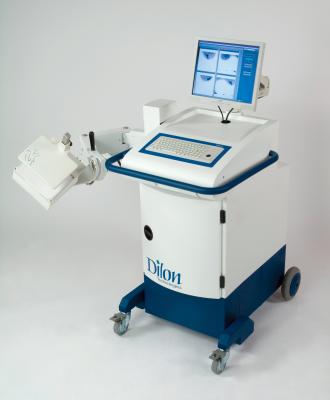
The MBI for the study was conducted using a Dilon molecular imaging system, a high-resolution, small field-of-view gamma camera, optimized to perform MBI. With MBI, the patient receives a pharmaceutical tracing agent that is absorbed by all the cells in the body. Due to their increased rate of metabolic activity, cancerous cells in the breast absorb a greater amount of the tracing agent than the normal surrounding tissue and generally appear as "hot spots" on the MBI image.

For more information: www.dilon.com

Related Content

News | Artificial Intelligence

Dec. 1, 2025 — Researchers at the University of California, Berkeley and University of California, San Francisco have ...

Time December 10, 2025
arrow
News | Breast Imaging

Dec. 01, 2025 — DeepHealth, a wholly owned subsidiary of RadNet, Inc., has launched the DeepHealth Breast Suite,2 an end ...

Time December 04, 2025
arrow
News | Women's Health

Dec. 1, 2025 — ScreenPoint Medical has completed a commercial agreement making its Transpara breast-imaging AI portfolio ...

Time December 03, 2025
arrow
News | Mammography

Nov. 30, 2025 — At RSNA 2025, Siemens Healthineers will introduce new capabilities for its Mammomat B.brilliant ...

Time December 02, 2025
arrow
News | RSNA 2025

Dec. 2, 2025 — Lunit, a provider of AI for cancer diagnostics and precision oncology, will present 14 studies at RSNA ...

Time December 02, 2025
arrow
News | Women's Health

Dec. 1, 2025 — A study of data from seven outpatient facilities in the New York region found that 20-24% of all the ...

Time December 02, 2025
arrow
News | Mammography

Nov. 26, 2025 — GE HealthCare has announced it received FDA Premarket Authorization for Pristina Recon DL, an advanced ...

Time November 29, 2025
arrow
News | Artificial Intelligence

Nov. 25, 2025 – Medical imaging AI company Avicenna.AI has announced a strategic partnership with Ferrum, an AI ...

Time November 25, 2025
arrow
News | Ultrasound Imaging

Nov. 12, 2025 — GE HealthCare and DeepHealth, Inc., a wholly owned subsidiary of RadNet, Inc., have announced their ...

Time November 20, 2025
arrow
News | Breast Imaging

Nov. 17, 2025 — RadNet, Inc. and its wholly owned subsidiary, DeepHealth have announced results from the largest real ...

Time November 17, 2025
arrow
Subscribe Now