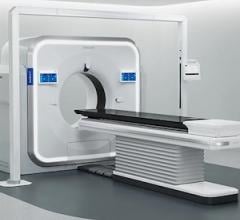
NeuroLogica joins forces with Massachusetts General Hospital to pilot OmniTom Elite with Photon Counting Detector (PCD) technology at patient point-of-care. (Photo: Business Wire)
July 13, 2021 — NeuroLogica Corp. announced that its state-of-the-art OmniTom Elite with Photon Counting Detector (PCD) technology will be piloted by Massachusetts General Hospital, bringing multi-energy computed tomography (CT) imaging to the patient’s point-of-care.
OmniTom Elite CT system is intended to be used for CT applications. NeuroLogica has added the ability to upgrade the OmniTom Elite system with PCD.
Photon counting is a next generation CT technology that sorts the different energies of X-rays after they have passed through the scan field. The multiple sets of CT data are acquired at the same time with configurable energy thresholds. This could potentially mean more accurate visualization and segmentation of bone, blood clots, plaque, hemorrhage, and intracranial tumor in critical intensive care unit (ICU) patients when in use with the OmniTom Elite scanner. As well, PCD has the potential to fundamentally change the use of injected contrast agents that highlight blood vessels by collecting high signal even at low contrast agent dosage. PCD provides the ability to capture CT data in multiple energy bands that can provide information on material composition of different tissues and contrast media. The OmniTom Elite with PCD is an important advancement in CT technology and was designed in house by the NeuroLogica research and development team in Danvers, Massachusetts, in collaboration with Samsung.
“Since the advent of point-of-care CT in 2004 by NeuroLogica, we have always known that point-of-care imaging can improve patient outcomes and increase the likelihood of a better post-traumatic quality of life,” said David Webster, Chief Operating Officer of NeuroLogica. “With the introduction of Photon Counting to the OmniTom Elite platform, we hope to expand the diagnostic possibilities of computed tomography at the patient’s bedside.”
Pending FDA 510(k) clearance of this technology, Massachusetts General Hospital will pilot test the OmniTom Elite with PCD to monitor post-trauma and post-surgical patients.
"We are excited about our collaboration with NeuroLogica,” said Raj Gupta, MD, PhD, Director, Ultra-High-Resolution Volume CT Lab, Massachusetts General Hospital. “This will be the first time where multi-spectral imaging will be used inside of the intensive care unit. We are particularly interested in how this technology can help guide patient care decisions through quantitative image analysis.”
The OmniTom Elite’s ability to provide versatile, real-time mobile imaging enables healthcare providers to administer point-of-care CT to critical patients without the need to transport them to a separate department. The mobile unit will decrease the time it takes to diagnose and initiate treatment for patients in the ICU. During the pilot of the OmniTom Elite with PCD, Massachusetts General Hospital will guide best practices and evaluate use cases for the novel system.
For more information: www.neurologica.com

 October 08, 2026