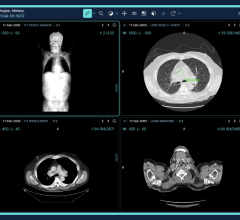
May 13, 2015 — At Nebraska Medicine, technology innovations bring with them opportunities to enhance patient care. The ability to integrate patient images with synchronized and simultaneous audio and video has Nebraska Medicine’s telehealth coordinator Kyle Hall looking at new ways to implement telehealth and mobile devices, such as iPads and Google Glass, at clinics and hospitals.
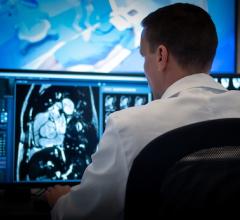
“Marrying video conferencing to imaging has been really difficult,” explained Hall. “Now with ResolutionMD’s support for audiovisual data, we have a one-stop shop that allows us to access patient images from multiple modalities while viewing audio video feeds.”
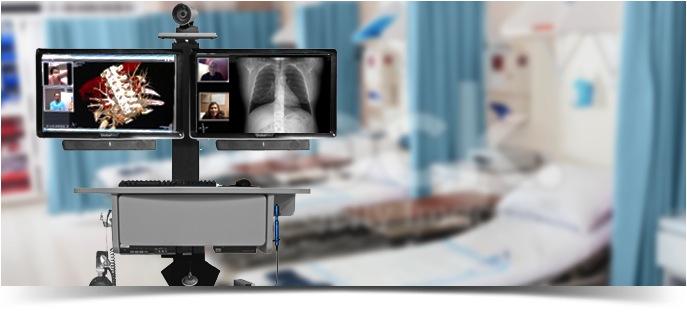
In hospital and clinic settings, telehealth sessions are frequently conducted with the use of telehealth carts, which integrate wireless Internet access, video monitors, cameras and CPUs on a mobile cart that can be wheeled between patient rooms or from bed to bed in an emergency room (ER). While patient images from a specific picture archiving and communications system (PACS) or image modalities have been integrated with telehealth video conferencing systems that run on these telehealth carts, Hall is experimenting with adding enterprise-wide image access to the carts by using ResolutionMD for both viewing images and displaying real-time audiovisual feeds. With this combination of health IT, no matter what the source of a patient image is, the telehealth cart will display it during a video conference.
“Now with grand rounds and patient care conferences, specialists can be part of the process without being there in person,” said Hall. “Multiple video connections that include the patient and provider and the specialists can be running while they all view the same image.”
The combination of ResolutionMD with telehealth carts is not only efficient, it’s also cost effective.
“We anticipate that we can significantly reduce the amount spent on audiovisual equipment,” he explained. “With an Internet connection, the cart can go anywhere and offer an all-inclusive solution”
Most exciting, the video feed to the telehealth cart can be coming from any source, including Google Glass. In a teletrauma situation, for example, the provider can be the source of the patient feed while patient images are displayed on the monitor. Using Google Glass, the provider can move around while providing the real-time patient conferencing feed instead of relying on the telehealth cart’s fixed camera.
“With this setup, the telehealth cart becomes the center point of communication, displaying patient images coming in from a PACS, the connection with a remotely located specialist and the provider’s view of the patient through the Google Glass,” said Hall.
While challenges remain in implementing this combination of technologies, using such a system for local connections between providers on a hospital campus is not far off. Keeping the communications local, or within a hospital campus network, eliminates security issues as well as transmission issues that come with using the cloud for Google Glass feeds.
“Localization takes the jitter out of wearable telepresence,” explained Hall. “It also improves speed, lowers costs on the network side and makes the security team happy.”
For more information: www.calgaryscientific.com
 February 24, 2026