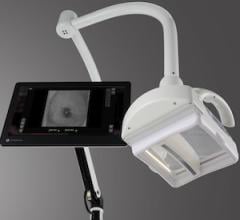
May 19, 2011 - The possibility of low-dose molecular breast imaging (MBI) looks promising, according to the most recent clinical evidence revealed this past month at the National Institutes of Health (NIH). Marcela Bohm-Velez, M.D., and her colleagues from Associates in Pittsburgh, Pa., shared preliminary results from a prospective study on low-dose MBI, specifically breast-specific gamma imaging (BSGI), at the SNM Breast Cancer Imaging: State of the Art 2011. Their results suggest it may be possible to reduce the radiation dose patients receive from a BSGI procedure by up to 60 percent.
The tracer used in this procedure, Technetium Tc99m Sestamibi (MIBI), has commonly been used in cardiac studies for years and was cleared by the U.S. Food and Drug Administration in the mid-1990s for diagnostic breast imaging. The recommended dose (20–30 mCi) was established using an older, larger, less sensitive whole body imaging system. Newer breast-optimized imaging systems have an inherently higher photon sensitivity that may allow a lesser dose to be used.
At the Weinstein Imaging Center, BSGI has become a valuable diagnostic tool, especially for patients with dense breast tissue that limits the effectiveness of mammography. "In order to optimize care and use BSGI to screen specific populations, we wanted to examine the possibility of using a lesser dose," said Bohm-Velez. "The present challenge for the clinician is that the use of lower doses is currently an off-label use of the pharmaceutical."
Their study compared breast tissue uptake at low-dose levels of 5, 10 and 15 mCi to those obtained with the conventional 20 mCi (740 MBq) injections. According to Bohm-Velez, "Although these are early results, we were quite surprised to see that we can reduce the dose to 15 mCi without any substantial impact on breast tissue uptake or image quality. In addition, a 10 mCi image still provided a very good, clinically viable image. The good news is that at lower doses, the breast tissue uptake is still sufficient; leading us to believe that a dose of 8 mCi is likely possible with the current instrumentation."
Bohm-Velez also mentioned current investigations are underway at the University of Virginia to potentially allow doses as low as 2–4 mCi to be used, making the radiation dose a patient receives from a BSGI/MBI study equivalent to that from a mammogram. According to Bohm-Velez, "The next steps are to gain the funding needed to expand this to a multicenter trial, investigate the impact of these optimizations and hopefully, in the end, change the drug insert package to include low-dose breast imaging."
For more information: www.dilon.com

 October 01, 2026