December 15, 2020 — Hoag Memorial Hospital Presbyterian became the only hospital in Orange County, and one of the first in the nation, to provide oncologists with the technology to pinpoint tumors during radiation treatment – even in some of the most difficult-to-target areas in the body, including the pancreas, lungs and other soft tissue tumors. Hoag will be utilizing this new treatment as part of its recent opening of a unique cell therapy trial for pancreatic tumors.
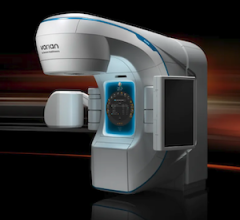
The real-time images provided by the ViewRay MRIdian help the dedicated radiation oncology team at Hoag Family Cancer Institute keep a radiation beam directly on target throughout every treatment, allowing for a degree of precision and monitoring capabilities that were not previously possible.
The technology, known as the MRIdian linear accelerator, combines a high-strength magnetic resonance imaging (MRI) machine and a linear accelerator into a single device. The MRI machine provides high-quality, real-time images of tumors to more precisely destroy them with radiation beams from the linear accelerator.
The results are improved outcomes and decreased side effects associated with radiation therapy treatments. The adaptive planning and real-time imaging capabilities enable Hoag’s radiation oncologists and physicists to respond to any unexpected changes before or even during treatment. This is particularly helpful with tumors that move as a patient breathes.
“Our bodies move constantly. Our lungs move as we breath, our diaphragms contract and relax. And any tumor or adjacent organ shifts accordingly,” said Craig Cox, M.D., medical director of Hoag Radiation Oncology. “With real-time MRI-guided therapy, we now can hit a moving target with exact precision. We can see the target, we can see the critical normal tissue we want to avoid, and we make adjustments to the treatment plan while the patient is being treated.”
For example, if a patient’s tumor were to shift due to breath or internal organ movement, the machine would stop the delivery of radiation and allow physicians to adjust their approach in real time. It’s a next-level technology that is safer, more adaptable and more effective in providing targeted radiation treatment, Cox said.
Ranked in the top 10% in the nation, Hoag’s cancer survival rates continually exceed national averages, illustrating the strength and effectiveness of its multidisciplinary tumor-specific programs. Hoag Radiation Oncology is the highest volume program in Orange County and among the strongest in Southern California. Hoag’s Radiation Oncology team consists of five dedicated radiation oncologists, with the recent recruitment of Shane Lloyd, M.D., Ph.D. from the University of California, San Francisco, five dedicated physicists, dosimetrists, radiation therapists and radiation oncology trained nurses. Together, this teams provides the most advanced approach to radiation oncology in Orange County between Hoag’s two comprehensive cancer centers in Newport Beach and Irvine.
“The addition of the MRIdian linear accelerator is yet another example of how Hoag is committed to delivering the most advanced, most effective cancer care to our Orange County community,” said Burton Eisenberg, M.D., Executive Medical Director, Hoag Family Cancer Institute and the Grace E. Hoag Executive Medical Director Endowed Chair. “Through philanthropic support and visionary leadership from Hoag’s world-renowned oncology physican team, Hoag continues to be on the forefront of technology and cancer therapy.”
Famed author Dean Koontz and his wife, Gerda, donated $9 million to support Hoag’s technological advancements. The purchase of the MRIdian linear accelerator was made possible by their generosity, and in honor of the philanthropic couple’s support, Hoag renamed it’s radiation oncology center in Newport Beach the Dean & Gerda Koontz Radiation Oncology Center.
Cox expressed his gratitude to the couple for helping Hoag lead the charge in changing cancer care.
“At Hoag, we are fortunate to have the community support that allows us to be early adopters, not just of the latest technology, but of technology that is changing how we approach cancer care,” Cox said.
For more information: www.hoag.org

 October 07, 2026