May 12, 2010 - This year, 35,720 Americans will be diagnosed with head and neck cancer, and 7,600 will die from the disease, according to the American Cancer Society.
To better manage the disease, researchers at the University of Michigan (U-M) Comprehensive Cancer Center have applied advanced radiation techniques for head and neck cancer to avoid treating critical structures that affect swallowing and eating. These principles and techniques treated the cancer effectively while greatly reducing long-term swallowing complications, according to the study published in Journal of Clinical Oncology.
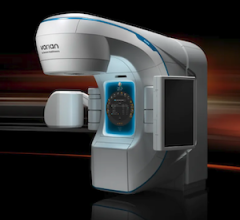
The researchers applied highly conformal, intensity-modulated radiation therapy (IMRT) and knowledge of the anatomy and physiology of the structures involved to carefully craft a novel treatment plan that avoids certain muscles in the mouth and throat that are most involved in swallowing. Generally, head and neck tumors do not spread to these structures.
Of the 73 patients treated with this technique, all but four were eating a normal diet after their treatment ended and only one was dependent on a feeding tube. Typically up to 20 percent of head and neck cancer patients remain dependent on a feeding tube after finishing an intensive course of radiation treatment concurrent with chemotherapy.
"More aggressive treatments for head and neck cancer have improved cancer control, but at the expense of quality of life. In this study, we did not compromise tumor control and we were able to improve this important quality of life measure," said study author Avraham Eisbruch, M.D., professor of radiation oncology at the U-M Medical School.
Scar tissue from radiation treatments to the head and neck often creates long-term problems with swallowing and eating solid foods, which does not improve over time. In this study, 29 percent of the patients required a temporary feeding tube during treatment because of pain while swallowing. But by one year after treatment, only one of the 73 patients on the study still required a feeding tube. Questionnaires to assess eating and swallowing function showed that on average, patients had only slight difficulties up to two years after treatment.
No patients had a spread of their cancer to the untreated structures and few cancers recurred overall, suggesting it was not harmful to avoid treating these areas. After three years, 88 percent of patients were cancer-free.
Eisbruch and his colleagues were also leaders in pioneering head and neck radiation treatments that avoid the salivary glands, reducing significantly the severity of permanently dry mouth, which has previously been a major complication of radiotherapy for head and neck cancer.
"We seek a cure for these patients, but we also seek quality of life. As cure rates have improved in recent years, quality of life issues become more and more important. Our next steps are to identify which patients are likely to do well with treatment and reduce the intensity of treatment to limit the burden of these side effects," Eisbruch said.
Methodology: The study looked at 73 patients with stage III or stage IV oropharyngeal cancer, including cancer of the tonsils or the base of the tongue. Patients were treated with seven weeks of daily intensity-modulated radiation therapy to the neck, designed to avoid the swallowing structures. Chemotherapy was administered weekly during this time. Patients were assessed with videofluoroscopy, an imaging procedure, periodically during treatment and up to two years after to assess swallowing. Swallowing was also assessed by doctors and through patient report using standard questionnaires.
Additional U-M authors: Felix Y. Feng, M.D.; Hyungjin M. Kim, Sc.D.; Teresa H. Lyden, M.A.; Marc J. Haxer, M.A.; Francis P. Worden, M.D.; Mary Feng, M.D.; Jeffrey S. Moyer, M.D.; Mark E. Prince, M.D.; Thomas E. Carey, Ph.D.; Gregory T. Wolf, M.D.; Carol R. Bradford, M.D.; Douglas B. Chepeha, M.D.
Funding: National Institutes of Health, Newman Family Foundation
For more information: jco.ascopubs.org
 October 07, 2026