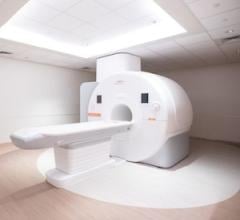
August 20, 2013 — Heavy use of magnetic resonance imaging (MRI) may be leading to unnecessary breast removal in older women with breast cancer, according to a study by Yale School of Medicine researchers in the current issue of Breast Cancer Research and Treatment.
"These data are concerning because the long-term benefits associated with bilateral mastectomy for older women with breast cancer are unclear," said the study's lead author Cary Gross. M.D., associate professor of internal medicine at Yale School of Medicine and director of the Cancer Outcomes, Public Policy, and Effectiveness Research (COPPER) Center at Yale Cancer Center. "Patient concern about recurrence and survival must be balanced with the increased risk for complications associated with more aggressive cancer surgery, particularly when there is no proven benefit of the more aggressive option."
The research team tracked the use of breast MRI and surgical care of 72,461 female Medicare beneficiaries, aged 67 to 94, who were diagnosed with breast cancer from 2000 to 2009.
The team found a considerable increase in the use of preoperative breast MRI over the study period from 1 percent in 2000-2001 to 25 percent in 2008-2009. The researchers also found that women who received an MRI were more likely to subsequently undergo more aggressive surgical treatment. In women who received mastectomy, 12.5 percent of those who had MRI received bilateral mastectomy, while only 4.1 percent of those who did not have MRI had bilateral mastectomy.
The study also revealed that women undergoing MRI were more likely to have a contralateral prophylactic mastectomy (surgery to remove both breasts when cancer was only found in one breast). Among women who underwent mastectomy, 6.9 percent of women who had an MRI underwent contralateral prophylactic mastectomy, compared to 1.8 percent in women who did not have an MRI.
"There has been no randomized controlled clinical trial demonstrating improved outcomes for women who undergo preoperative breast MRI at any age," said Brigid Killelea, M.D., assistant professor of surgery at Yale School of Medicine, and first author on the study. "Breast conserving therapy, when feasible, remains the preferred approach for women with early stage breast cancer."
For more information: www.medicine.yale.edu/news
 October 07, 2026