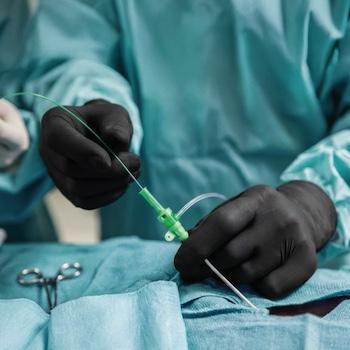
Sept. 22, 2026 — Clinicians’ hands can receive up to 1,000 times more radiation than other parts of the body during image-guided procedures1;yet, radiation-attenuating gloves are used in only 10% of applicable cases2, putting healthcare professionals at risk of the damaging effects of radiation.
Mölnlycke Health Care US has launched a new surgical glove range designed to reduce clinician hand exposure to scattered radiation during fluoroscopy-guided, interventional and other image-dependent procedures. Biogel Radiation Protection gloves combine radiation attenuation with the dexterity expected from a Biogel surgical glove.
Surgeons’ hands are the most exposed, yet least protected, area during radiation-guided procedures. In some settings, hand exposure has been found to be nearly 1,000 times higher than exposure to other parts of the body3. Yet, while lead aprons and shields are worn in 99% of cases, radiation-attenuating gloves are used in only 10% of applicable procedures4.
Radiation exposure is cumulative and often invisible at first. It can lead over time to skin and nail damage, deeper tissue injury, impaired hand function and long-term elevated cancer risk. In one clinical survey 31% of surgeons reported dermatologist-diagnosed radiation-induced skin injury to their hands5.
Gloves can Reduce Hand Radiation Exposure
Research indicates that radiation-attenuating gloves can reduce hand radiation exposure by 58% to 80%, depending on glove composition and procedural conditions6,7.
Commenting on the launch, Dr. Ashish Sahai, M.D., FAAOS, said, “Radiation safety protocols have advanced in many areas, but hand protection has remained a clear blind spot for many of my colleagues. Surgeons’ hands may receive dramatically higher exposure than the rest of the body; yet, protection still lags far behind lead aprons and thyroid shields. Our hands are our most valuable asset, and these new gloves offer an option for wearing radiation protection while preserving the dexterity and tactile sensitivity modern surgery demands. Surgeons should never have to choose between protecting themselves and performing at their best for the patient.”
The Biogel Radiation Protection range has been developed to help clinicians reduce radiation exposure to the hands while maintaining the performance standards surgeons need to deliver outcomes for their patients. Unlike traditional radiation gloves, the new range combines a proprietary tungsten and polyisoprene formulation with the fit, comfort and tactile sensitivity expected from a Biogel surgical glove.
The Biogel Radiation Protection range is fully FDA 510(k)-cleared for direct patient contact and is intended for surgeons and clinicians working in environments where radiation exposure to the hands is a routine element of care delivery8.This new addition to the Biogel range supports Mölnlycke’s mission to deliver innovative solutions to enable surgeons’ hands to perform at their best.
References
-
Chapman T, Martin DP, Williamson C, Tinsley B, Wang ML, Ilyas AM. Mini C-arm fluoroscopy: does its configuration matter for radiation exposure to the surgeon? HAND. 2018;13(5):552-557.
-
Dudley AG, Semins MJ. Radiation Practice Patterns and Exposure in the High-volume Endourologist. Urology. 2015 May;85(5):1019-1024.
-
Chapman T, Martin DP, Williamson C, Tinsley B, Wang ML, Ilyas AM. Mini C-arm fluoroscopy: does its configuration matter for radiation exposure to the surgeon? HAND. 2018;13(5):552-557.
-
Dudley AG, Semins MJ. Radiation Practice Patterns and Exposure in the High-volume Endourologist. Urology. 2015 May;85(5):1019-1024.
-
Asari T, Rokunohe D, Sasaki E et al (2022) Occupational ionizing radiation-induced skin injury among orthopedic surgeons: A clinical survey. J Orthop Sci; 27(1):266-271.
-
Solano A, Klein A, Siah MC, et al. “The use of radiation protective surgical gloves reduces hand radiation exposure without increasing operator radiation dose during fluoroscopically guided interventions.” Journal of Vascular Surgery. 2025;82(3):875–881.
-
Emiliani E, et al. “Radiation exposure using leaded versus regular latex surgical gloves in endourological procedures: a prospective comparative study.” Urolithiasis. 2025
-
Data on File.


 September 17, 2026