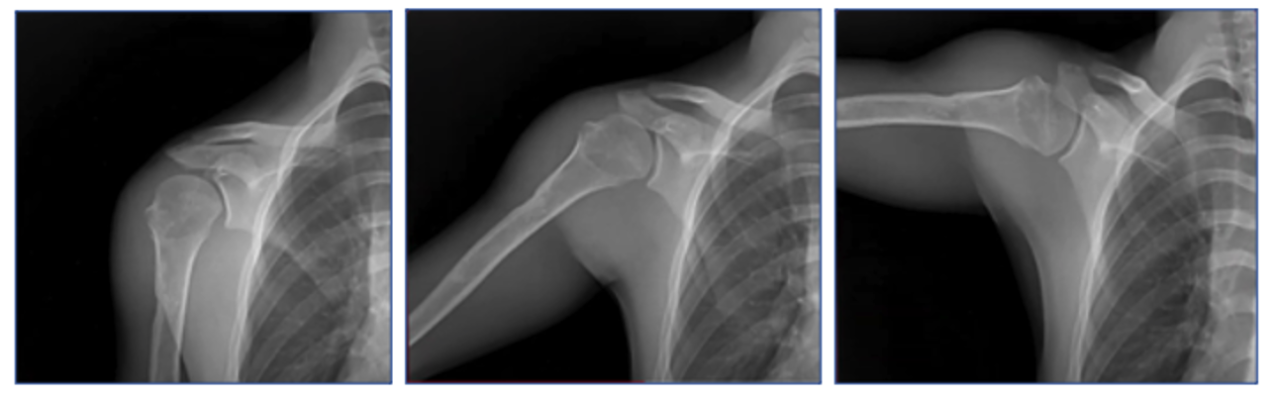
March 20, 2023 — A study by Emory Healthcare reports that Konica Minolta Healthcare’s Dynamic Digital Radiography (DDR), an enhanced version of a standard X-ray system that captures motion, provides more quantitative information on shoulder motion and a greater understanding of the injury and postoperative improvement than static imaging alone. Angel X. Xiao, MD, led the team of researchers to explore the “Variation in Scapulohumeral Rhythm on Dynamic Radiography in Pathologic Shoulders: A Novel Diagnostic Tool,” published in the Journal of Shoulder and Elbow Surgery. The team also found DDR is a reproducible method to quantify and compare the scapulohumeral rhythm (SHR), enabling clinicians to visualize both the pattern and extent of motion impairment in the shoulder, which varies across different types of injuries and pathologies.
“With DDR, we can very clearly see how structures move in relation to one another in the shoulder anatomy in a way we’ve never been able to see before – both when it is moving and at a particular time point,” says Eric R Wagner, MD, MSc, Assistant Professor in the Department of Orthopaedics at Emory University and Director of Upper Extremity Research at Emory Healthcare. “We can obtain more critical information from this dynamic motion analysis using DDR, and that is an inherent advantage for both diagnosis and post-surgical treatment monitoring.”
DDR is the next evolution in X-ray, helping to enhance diagnosis and management of diseases and injuries, including many orthopedic conditions. DDR enables clinicians to visualize the dynamic interaction of anatomical structures, such as tissue and bone, with physiological changes over time. DDR is not fluoroscopy; it is a series of individual digital images acquired at high speed and low dose. In the same study, clinicians can acquire static and dynamic images.
In the study, 121 patients underwent a DDR exam to assess arm motion, beginning with the arm at rest by the patient’s side and then proceeding to maximal abduction, or with the arm raised away from the body. Using the DDR imaging data, humeral abduction, scapular upward rotation and scapulohumeral rhythm were all quantified. Differences in SHR were identified using multivariate linear regression between normal controls and patients with pathologic conditions.
Although SHR has been studied observationally since the 1930's, inter-pathological comparisons in the literature are scarce. The study reported that DDR makes it possible to cost-effectively and reproducibly assess shoulder motion. DDR was also found to be a reliable and efficient method for quantifying the severity of motion aberrancies in an array of shoulder pathologies. Additionally, the authors wrote that DDR is “a simple-to-operate technology that can be realistically implemented into the clinical workflow.”
At the American Academy of Orthopaedic Surgeons (AAOS) 2023 Annual Meeting, Michael Gottschalk, MD, Associate Professor and Director of Clinical Research in the Department of Orthopaedics at Emory Healthcare and a co-author of the SHR paper, will present data demonstrating the clinical utility of DDR in assessing the upper extremity. Dr. Gottschalk will review cases where dynamic visualization impacted diagnosis and treatment, and discuss an array of clinical conditions where DDR can be utilized to supplement static imaging. The lecture will be held in the AAOS Product Innovation Theater on Thursday, March 9.
“Konica Minolta congratulates the Emory Healthcare Orthopaedic research team on the recent publication of their study comparing SHR across different shoulder pathologies. This research validates the clinical utility that the Emory Orthopaedic physicians have seen from their use of DDR as standard of care for upper extremity imaging,” says John Sabol, PhD Clinical Research Manager, Konica Minolta Healthcare. "This publication joins the growing body of evidence that demonstrates the clinical utility and value of DDR across a range of patient conditions. We are confident that as more organizations adopt this cost-effective and easy-to-use technology, they will continue to uncover additional novel applications of DDR that will help physicians rethink how they use X-ray to make better patient decisions, sooner.”
For more information: https://healthcare.konicaminolta.us

 October 23, 2026