August 4, 2010 — The ability of electronic brachytherapy to offer patients a safe, isotope-free alternative to traditional radiation therapy across a broad range of cancers was the focus of 14 clinical research studies presented at the recent American Association of Physicists in Medicine Meeting.
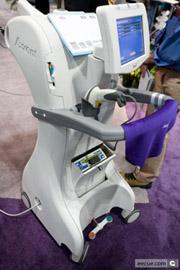
According to Xoft, Inc., the clinical benefits of Axxent Electronic Brachytherapy, eBx™, System for single-dose IORT and accelerated brachytherapy applications continues to be substantiated by multiple publications.
Several studies continue to demonstrate the ability of Electronic Brachytherapy to deliver equivalent treatment results to traditional isotopic therapies with reduced exposure to surrounding healthy tissues and other studies validate its safety and performance. Another series of studies explored extending the utilization of Electronic Brachytherapy with new applications to the treatment of breast and other cancers, including skin and endocavitary cancer.
Researchers from Washington University in St. Louis evaluated the ability of Electronic Brachytherapy to serve as an alternative for the treatment of early stage rectal carcinoma in the study, "A New Technique for Endocavitary Radiotherapy: Treatment with an Electronic Brachytherapy Source."
Results of the dosimetric comparison between the historically used Philips RT-50 (papillon technique) and the Xoft Axxent System were presented. Based on equivalent treatment dose and reduced exposure to treatment professionals, results demonstrated that Electronic Brachytherapy may be an excellent dosimetric replacement to the Philips RT-50 Endocavitary Unit for treatment of endocavitary cancers. With the benefits associated with the non-isotopic, electronic source, researchers concluded that this new technology may increase utilization of endocavitary radiotherapy.
The study "Comparison of Tumor and Normal Tissue Dose for Accelerated Partial Breast Irradiation Using an Electronic Brachytherapy eBx Source and Iridium-192 Source," compared treatment plans for patients treated with Electronic Brachytherapy (eBx) using the Axxent System as adjuvant therapy for early stage breast cancer with treatment plans prepared from the same CT image sets using an Iridium-192 (Ir-192) source.
Results demonstrated that both forms of balloon-based brachytherapy provide comparable dose to the planning target volume (PTV). However, Electronic Brachytherapy is associated with a considerably increased dose within the PTV near the surface of the balloon and decreased dose outside the PTV, resulting in significantly reduced dose to the heart, ipsilateral lung and healthy organs and tissue.

 October 01, 2026